Skip to content

Negro Leagues / 1948 American League

Satchel Paige's Hesitation Pitch

The pause the rulebook outlawed

Documented

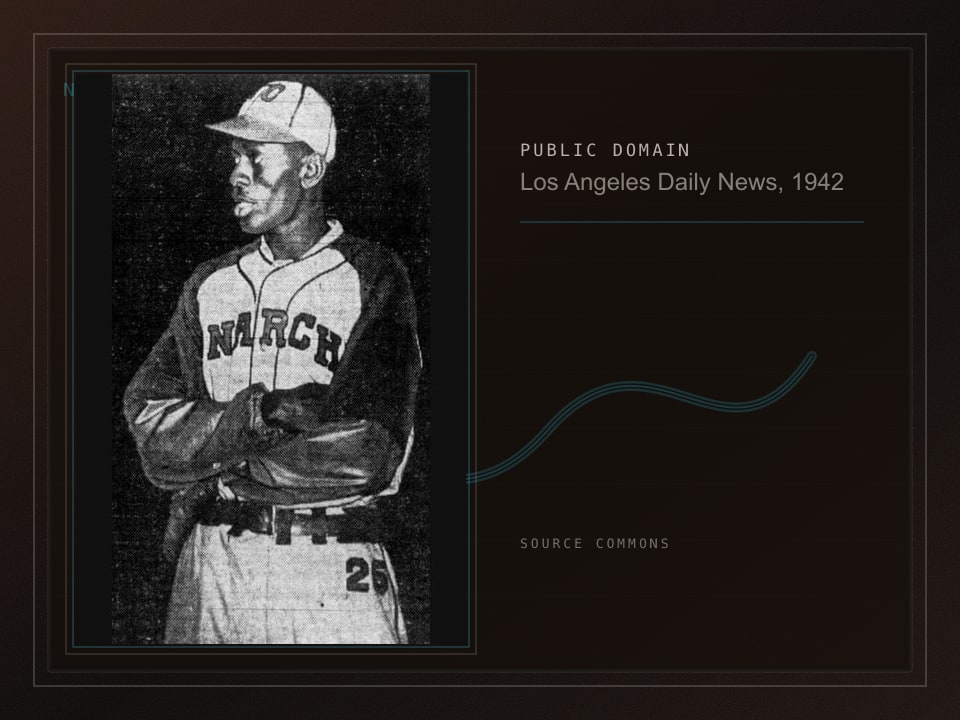
Not a grip but a piece of timing: a two-stage delivery with a deliberate hitch at the very top of the windup, the front foot already planted, everything frozen for a beat before the arm finally came through. The pause broke the hitter's internal clock so completely that men swung before the ball was even gone. It is the rare lost pitch that died not from forgotten technique but from a presidential ruling.

What it was

A windup with a built-in stall at its peak, the lead foot down and the body held motionless for up to a beat before release, designed to desynchronize the hitter's timing so badly that some committed to a swing before the ball left Paige's hand.

Why it is lost

The moment it reached the integrated majors it triggered a rules fight. After Paige threw it on July 9, 1948, the hitter flung his bat in disgust; American League president Will Harridge then ruled the move a balk under the continuous-motion rule, declaring any repeat illegal. The rulebook killed it on arrival, and it has no modern major-league equivalent.

The surviving record

The bat-throwing batter

Paige threw the hesitation pitch to St. Louis Browns hitter Whitey Platt, who was so caught out that he hurled his bat up the third-base line; the Browns' bench argued it was a balk, but the on-field umpire let the strike stand.

The ruling

AL president Will Harridge subsequently declared the hesitation pitch illegal, ruling that if Paige threw it again it would be called a balk.

Year

The incident and ruling came during the 1948 American League season, Paige's rookie year in the majors at roughly age 42.

Every line here is what the recovered record can actually support, labeled by its source and its confidence. Where the legend says more than the record can prove, the gap is shown, not filled.