Photo-supported grip cue
Three close fingers sit on the ball, adding contact area and pressure compared with a two-finger fastball grip.
Offspeed
Lay three close fingers over the ball and seat it back toward the palm. The same fastball arm motion comes out slower, and the hitter commits before the speed difference is clear.
Grip Evidence
This is the visual grip-reference layer for Three-finger changeup. It names visible placement and Austin's own feel notes, then stops before making measured claims.
A looping close-up of Austin's three-finger changeup grip: three fingers set close together across the top of the ball.
Original · Austin H.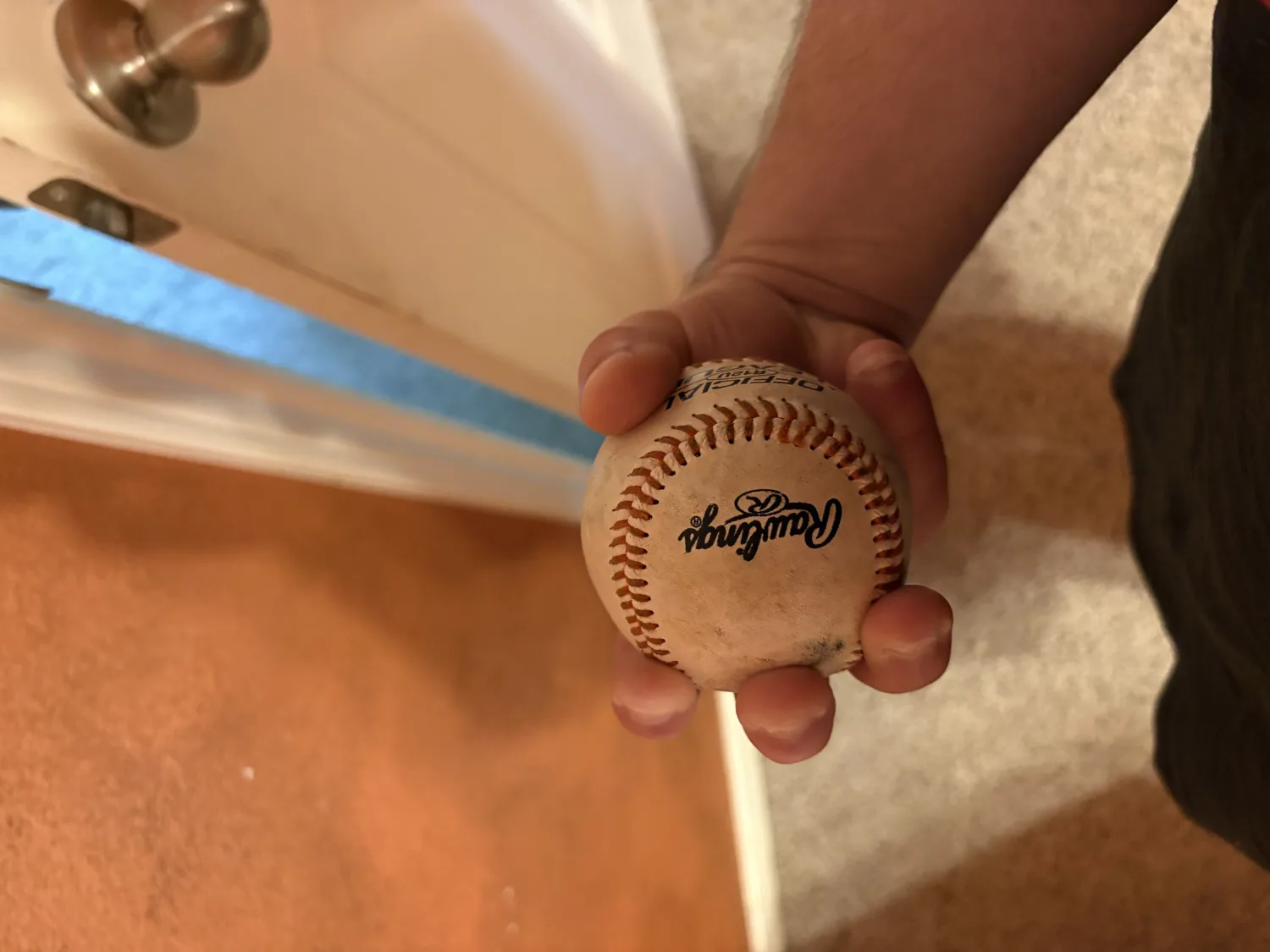 Top
TopThree fingers seated close together across the top of the ball.
Original · Austin H. · 2026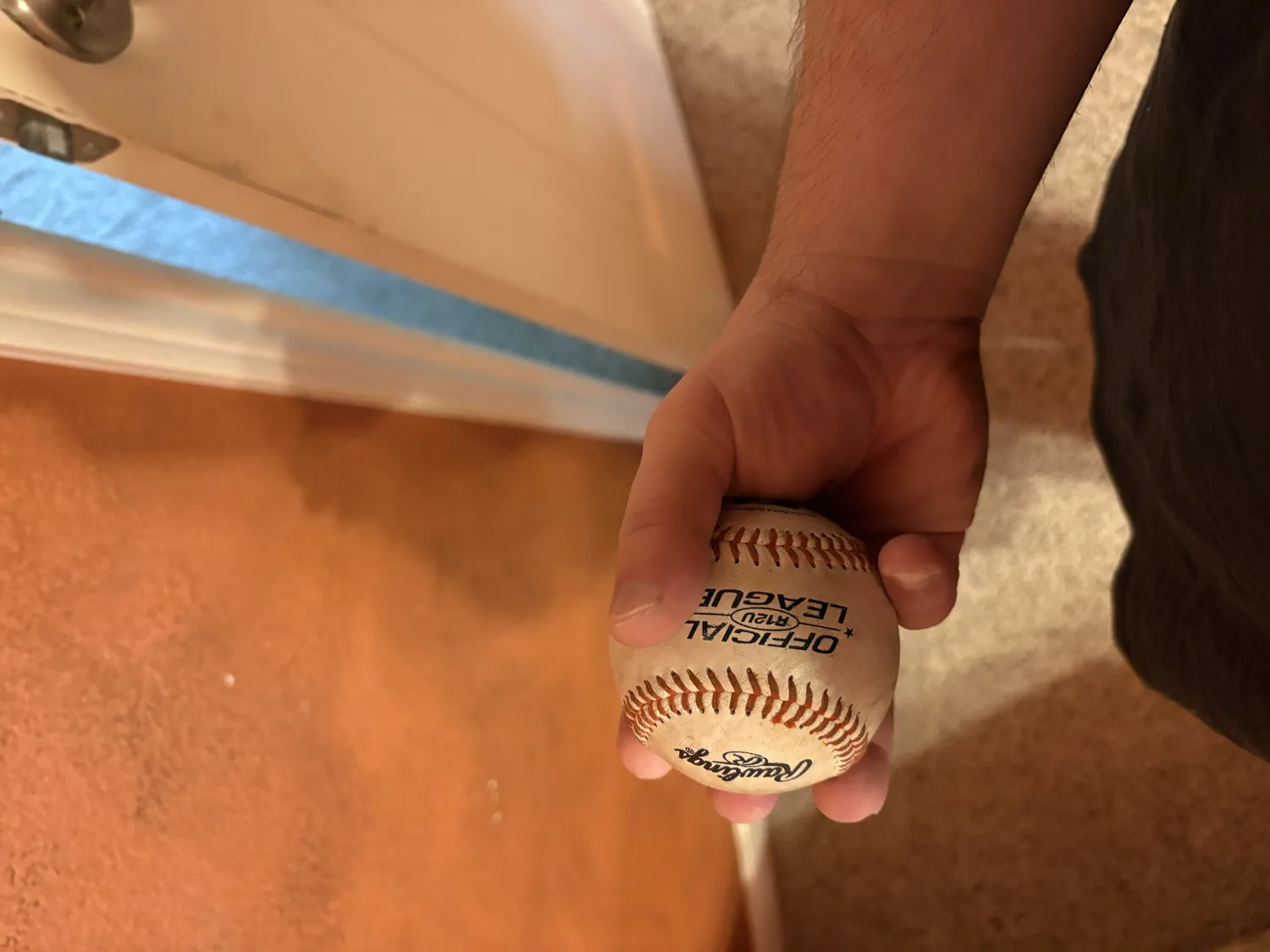 Side
SideFrom the side, the three fingers across the top with the ball set back in the hand.
Original · Austin H. · 2026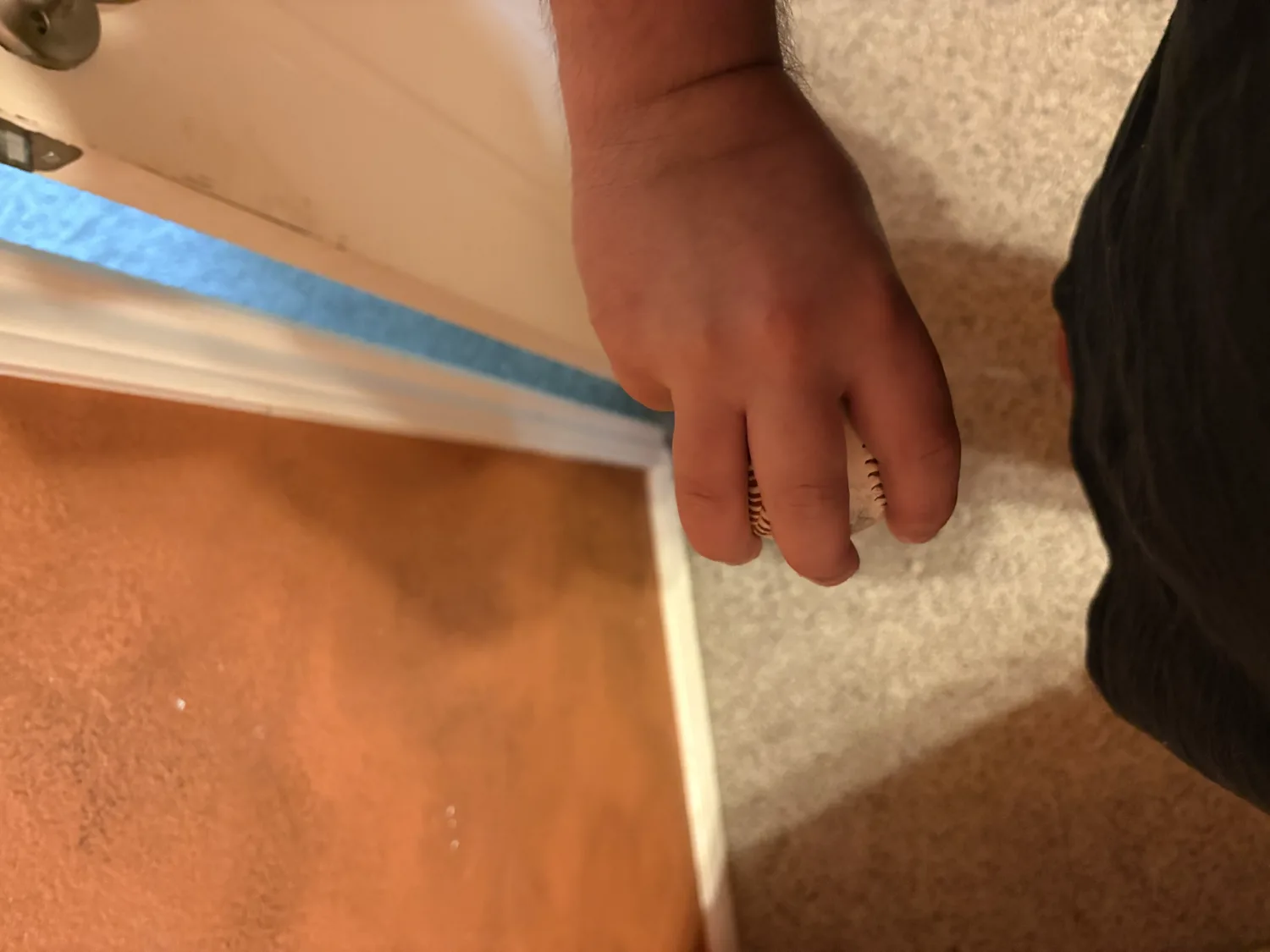 Underside
From underneath, the three fingertips coming over the top edge.
Original · Austin H. · 2026Photo-supported grip cue
Three close fingers sit on the ball, adding contact area and pressure compared with a two-finger fastball grip.
Pitcher's own words
Three fingers set very close together across the ball. Same idea as the football change, just a touch less hand on it — more fingers than a fastball means more surface and more drag, so it leaves softer than the arm speed says it should.
My fourth pitch, and one I threw a lot in games. It came in looking like a fastball and dropped with less break than the curve — not as sharp or as consistent, but it sold the fastball look right up until it died.
Sourced public record
The existing official and cited claims stay in the page below with their original confidence labels. This photo does not upgrade or replace those sources.
Grip photo only; does not prove tracked speed, spin, shape, command, injury risk, or outcome.
See every grip in the Grip Library.
Set three fingers across the top of the ball instead of the usual two and seat the ball deeper toward the palm, which bleeds off the speed the wrist and fingers would otherwise generate.
Thrown with the same arm action as a fastball but markedly slower; hitters cannot read the reduced speed until the ball is nearly on top of them, so they commit early.
The foundational changeup from which the circle change, palmball, and split-change variants branch; the three-finger grip is one of the named changeup grips taught alongside the circle change.
Who throws itTaught widely as a first off-speed pitch; less common at the major-league level than the circle change.
Study this first
The three-finger change and the circle change are the two named changeup grips taught side by side. The filed Circle Change is the modern default; this is the simpler one most arms learn first.
Basic file
This pitch has a sourced one-line grip and movement and an honest explanation, not yet a filed specimen with authored grip geometry and a full craft chapter. A fuller breakdown is coming; the source trail stays attached.
Others in the offspeed
What did you notice? Ask about a detail, share a firsthand observation, or add a source to the conversation.