Photo-supported grip cue
Two fingers are set against the seam with the thumb acting as the main opposing support cue.
Archive file · Specimen No. 03
It falls straight off a table, twelve o’clock to six. Same arm speed, late and hard.
Open this like an archive drawer: grip first, source attached, shape in words, no invented spin or movement numbers. The file exists so the hold can keep moving forward.
Drops · glove-side sweep
A heavy, late, straight-down drop. Topspin and gravity pull the same way, so the floor falls out far harder than a spinless ball would, with little sideways run. The cleanest ones drop almost straight; tilt the axis glove-side and it sweeps into a diagonal power curve.
ShapeOfficial dataThe hand gets on top of the ball so the fingers impart pure topspin. The middle finger leverages a seam, the index rests on the leather beside it, the thumb sits underneath on a seam, and the ball is tucked back toward the palm to load spin.
Archive Drawer / Grip Lab
Lead with the hand. The fingers on the ball below are the sourced contacts, solved onto the seam. Drag the ball, or use the view buttons.
View
Hand
Keyboard: arrows switch views · F flips the hand · H lifts it
What it should feel like
Get on top and pull down through the front of the ball. Stay over it; finish short.
Grip geometry is schematic and shows the straight-curve family; spike and knuckle variants change the index shape. In a live photo, look for two fingers lined or cornered against the seam with the thumb as the main opposing pressure.
Ball depth
Deeper in the hand
Spacing
Fingers close
The hand gets on top of the ball so the fingers impart pure topspin. The middle finger leverages a seam, the index rests on the leather beside it, the thumb sits underneath on a seam, and the ball is tucked back toward the palm to load spin.
Paraphrased from Driveline, not quoted. Spike and knuckle variants are a common feel-based alternative.
Driveline's standard curve grip leverages the middle finger on the seam with the index on the leather and the thumb on a seam underneath. Topspin comes from getting the fingers in front of the ball and pulling down, the cue being to yank it down with the middle finger.
Paraphrased. Spike "CB 3-4" variants live on the same page.
The name is the clock face: the break runs in a straight line from 12 to 6. A higher arm slot makes it more vertical, a true 12-6; a lower slot tilts it toward a 1-7 slurve with more sideways movement.
Paraphrased coaching reference for the clock-face naming and the arm-slot relationship.
Grip Evidence
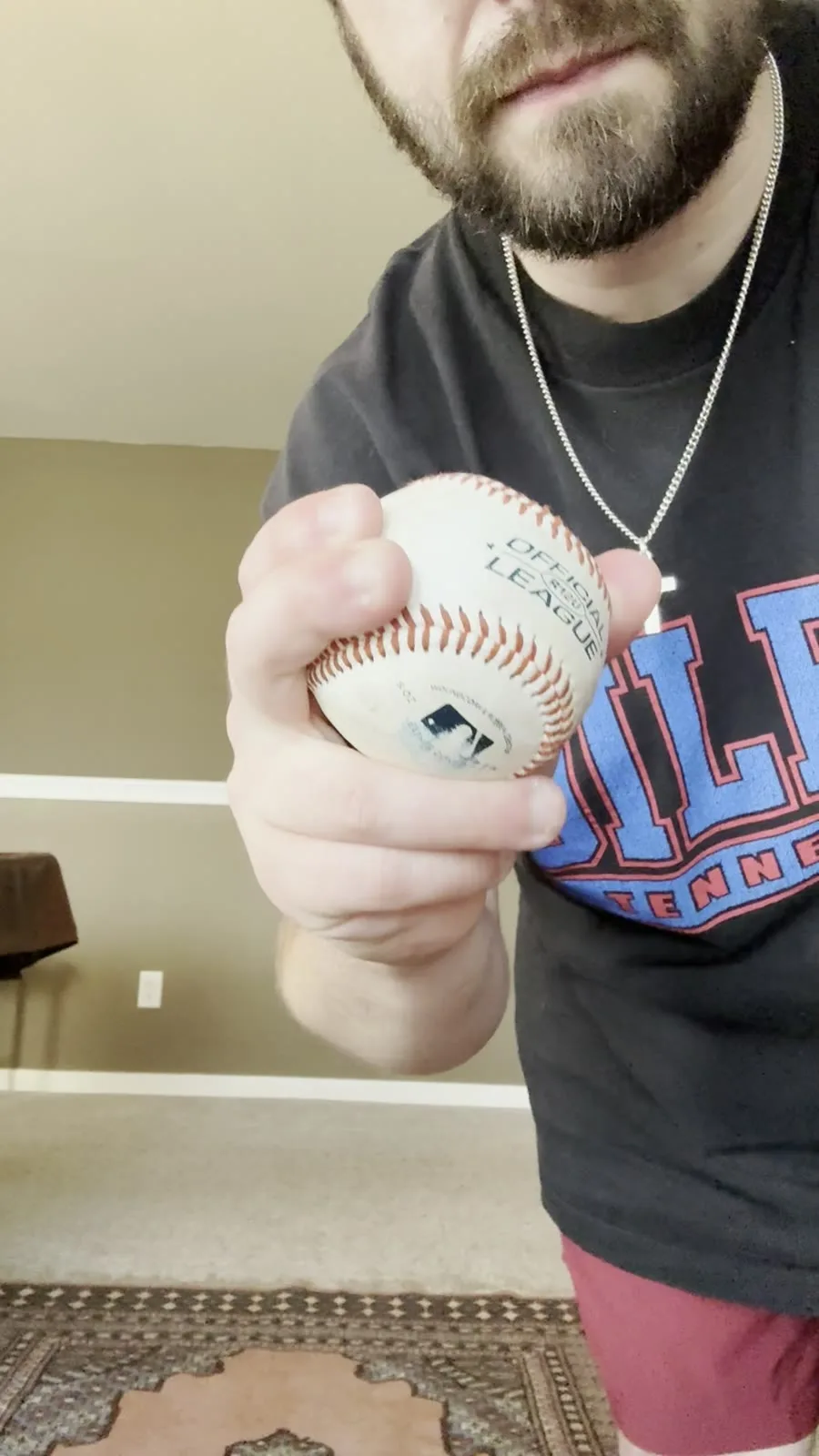
This is the visual grip-reference layer for 12-6 curveball. It names visible placement and Austin's own feel notes, then stops before making measured claims.
A looping close-up of Austin's 12-6 curveball grip: two fingers tucked together and cornered against one seam.
Original · Austin H.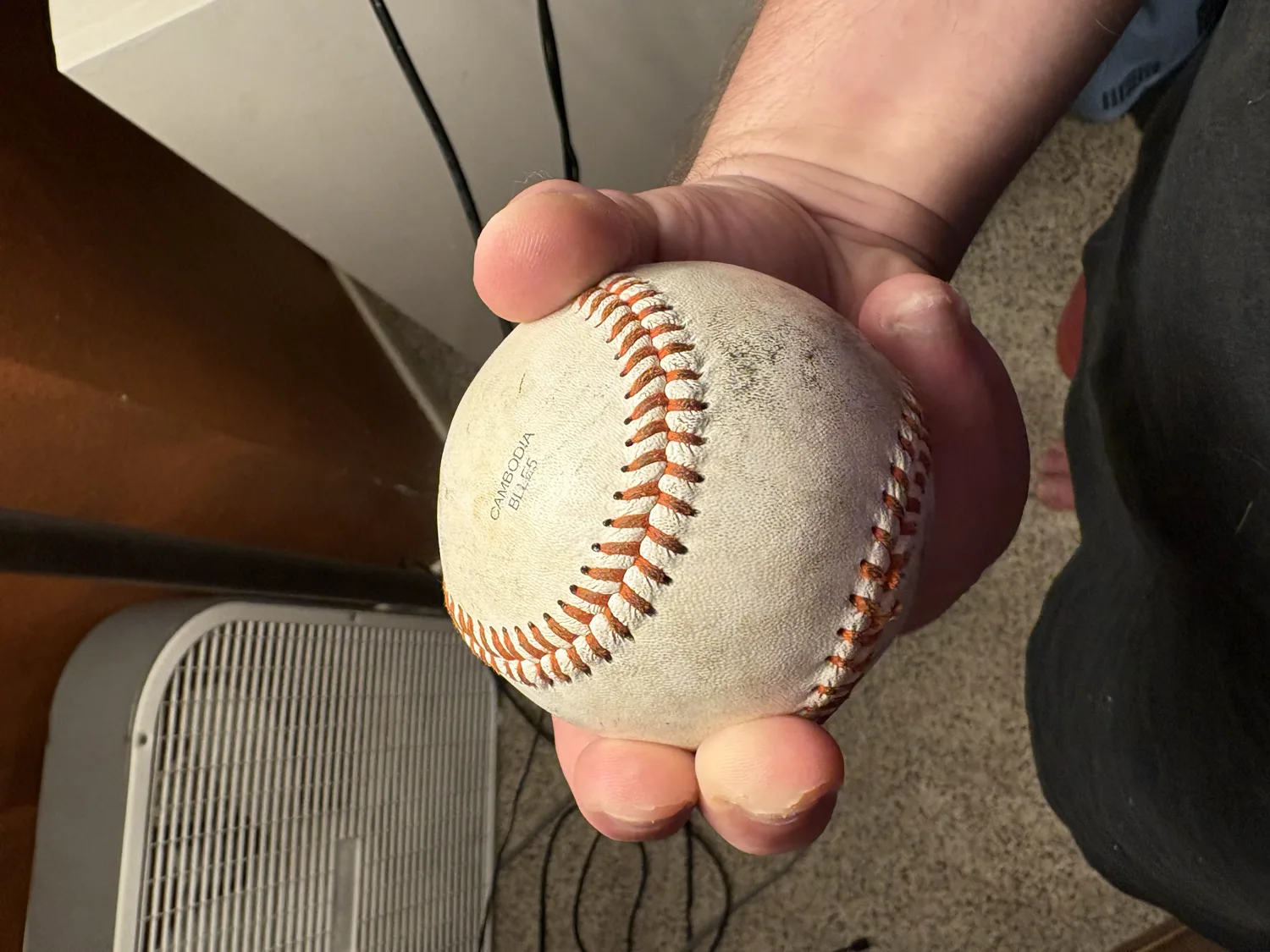 Top
TopTop-down: the two fingers tucked together and cornered against a single seam, the rest of the ball left open.
Original · Austin H. · 2026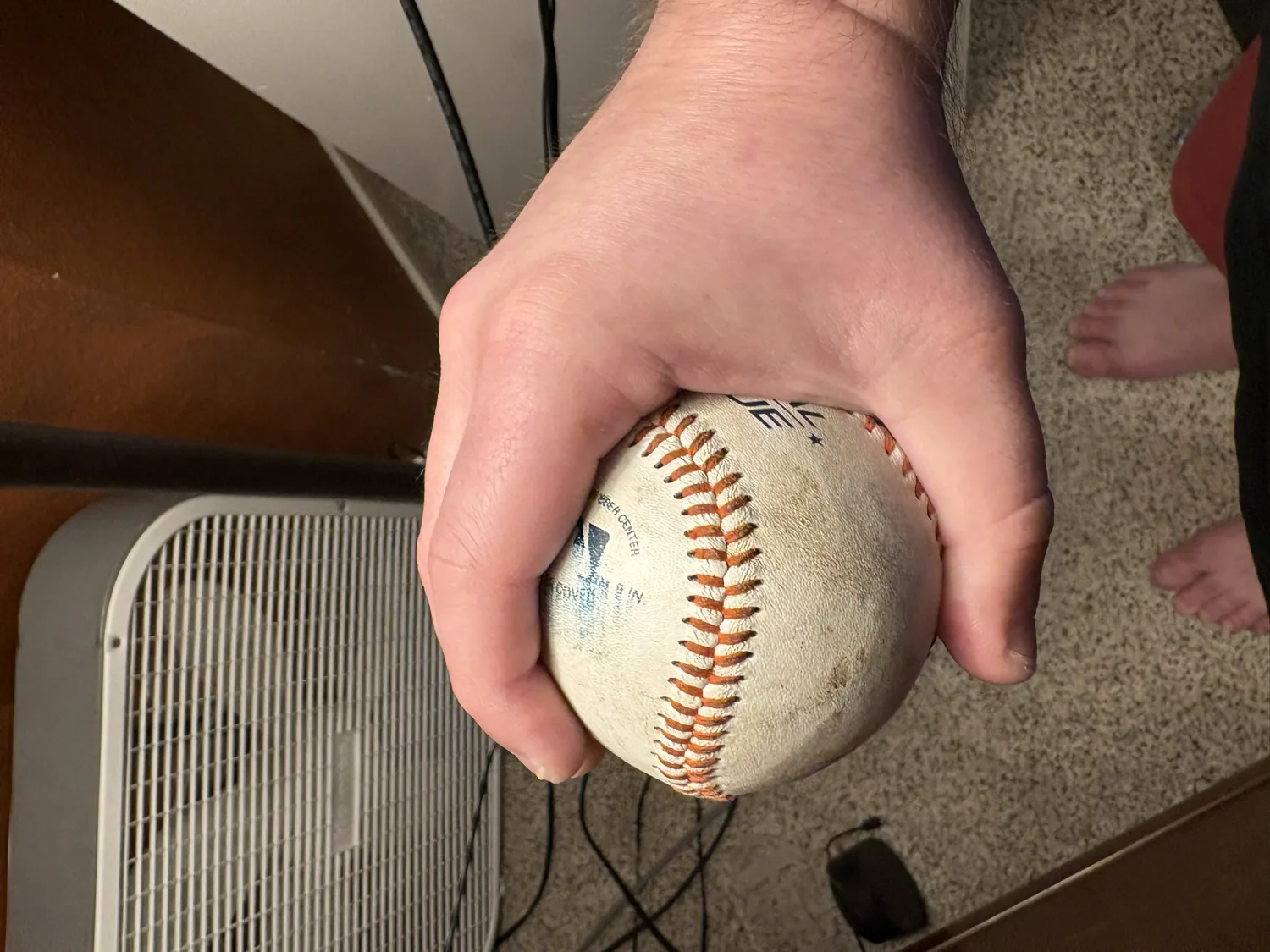 Side
SideFrom the side: the fingers pinched to the seam, thumb braced underneath.
Original · Austin H. · 2026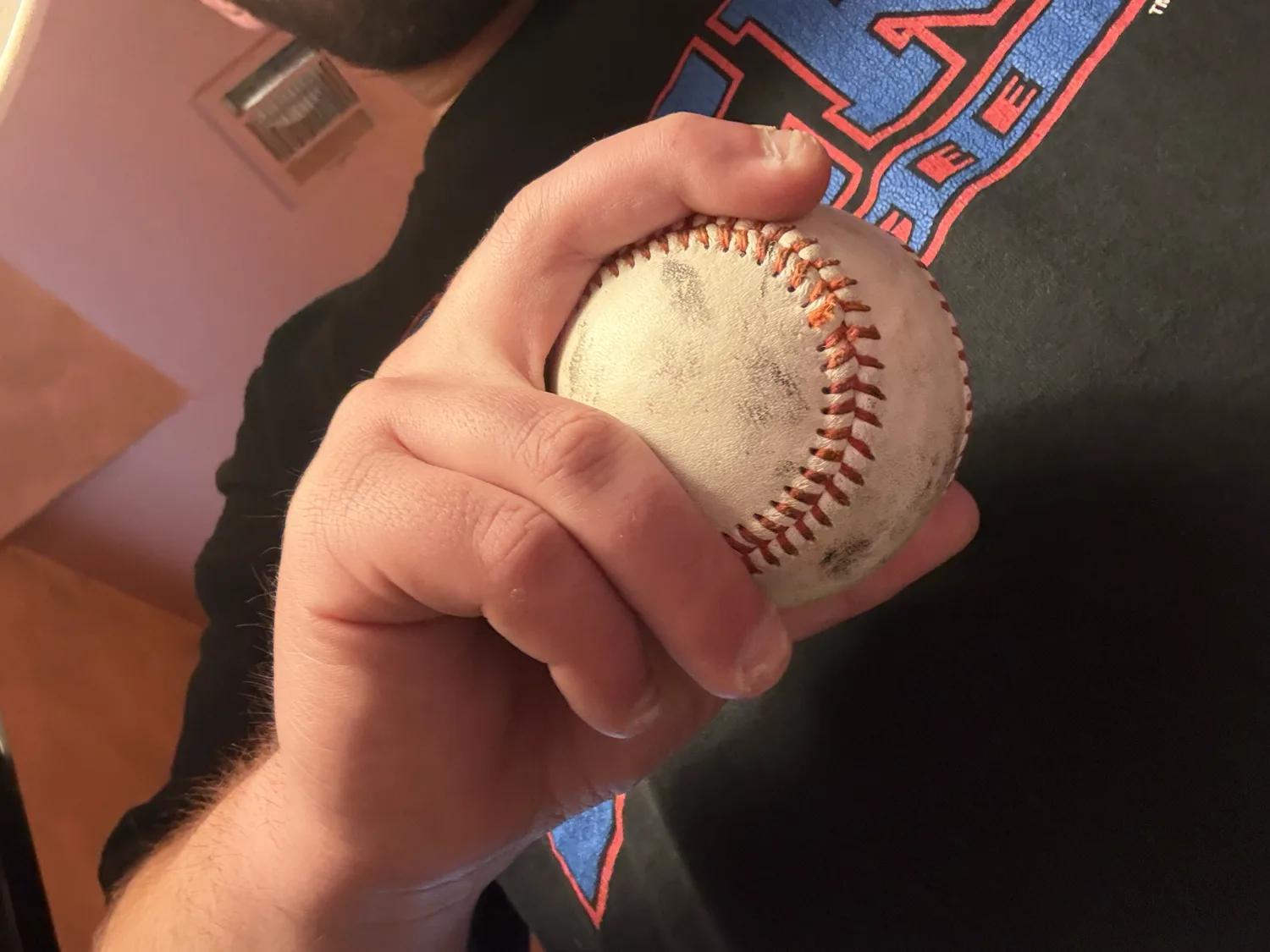 Side
SideSet in the hand, the knuckles bent over the seam before the spin goes on.
Original · Austin H. · 2026Photo-supported grip cue
Two fingers are set against the seam with the thumb acting as the main opposing support cue.
Pitcher's own words
Two fingers lined up and cornered against the seam, with no other pressure on the ball but the thumb. The grip is so distinct you do not even need to see the release slot to know it is a 12-6 — the fingers tucked tight to one seam give it away.
A genuine 12-6 when it was working: it came in with real loop and then fell off the table at the last second. The down-mover in my mix — more loop than the changeup, and a sharper drop.
Sourced public record
The existing official and cited claims stay in the page below with their original confidence labels. This photo does not upgrade or replace those sources.
Grip photo only; does not prove tracked speed, spin, shape, command, injury risk, or outcome.
See every grip in the Grip Library.
Release Room
Grip shape only matters if the release makes sense. Read pressure, thumb support, and ball depth before you read the pitch shape.
The ball can sit deeper than a fastball to load the pull-down feel.
Primary curveball pressure
Middle finger pulls down through the front of the ball to create topspin.
Topspin is generated by getting on top of the ball and driving the fingers over the front of it, pulling down so it rotates forward rather than with a slider's lateral tilt. Per Driveline, a higher release point leads to a more top-down shape, the classic 12-6, while lower slots add sideways run and turn it into a slurve.
Paraphrased from Driveline. The fastball-mirror framing is grounded in MLB.com vertical-movement context.
Movement
The read is shape, not a gauge. The spin words explain why it moves that way, and every prose claim still carries its source.
Shape
Drops · glove-side sweep
A heavy, late, straight-down drop. Topspin and gravity pull the same way, so the floor falls out far harder than a spinless ball would, with little sideways run. The cleanest ones drop almost straight; tilt the axis glove-side and it sweeps into a diagonal power curve.
Spin words
Near-pure topspin: the axis lies roughly flat and points the Magnus force straight down. Kershaw's curve, the cleanest modern 12-6, sits near the bottom of the clock with almost all of its spin doing work. More glove-side tilt makes a diagonal power curve instead.
Craft read
Where the fastball spins backward, the curve spins forward. That topspin pulls the ball down late. It looks like a fastball out of the hand, then the floor drops out. A true twelve-to-six falls almost straight, with little sideways break.
The one teaching sentence
The curve is the four-seam fastball's mirror. The fastball spins backspin, so its Magnus force points up and it rides; the 12-6 spins topspin, so its Magnus force points down and it drops. Same physics, flipped axis: where the fastball fights the fall, the curve doubles it.
Master Files
A textbook 12-6, the curve that anchored a career beside it, and a power curve to show where the straight-down line ends. The visual is our own seam schematic. What sets each version apart is in the read, not a gauge.
The textbook pure 12-6: almost all of its movement is straight-down drop with minimal sideways run. MLB's vertical-movement context names him as a large-drop curveball thrower.
The straight-down standard. His curve falls almost on a vertical line, with so little sideways run that it reads as pure 12-to-6 — the drop everyone else's curve is measured against.
Honors · Three-time Cy Young Award winner and a 2014 NL MVP.
The "Uncle Charlie" that anchored a long Cardinals career and ended the 2006 pennant on a called strike three. A true over-the-top 12-6 in his prime; as his arm slot dropped with age it flattened into a two-plane sweep, the bridge between Kershaw's straight-down curve and Morton's power 1-7. He said it came out the same speed no matter how hard he threw it.
The curve as a career. A true straight-down 12-6 in his prime that flattened with age into a two-plane sweep, glove-side run creeping in as the slot dropped — the same pitch aging from a vertical drop toward a diagonal break.
Career · A 200-game winner across a long career, almost all of it with the Cardinals.
I could throw it as hard as I could possibly throw it, and it’s going to come out the same speed.
The power-curve contrast. Big drop with heavy glove-side tilt, so it reads as a 1-7 power curve rather than a pure straight-down 12-6. It marks where the line ends.
Where the straight line ends. The axis tilts glove-side until the drop turns diagonal — a hard, sweeping 1-7 power curve, the curveball pushed off its vertical line until it stops being a 12-6.
Profile · A two-time World Series champion whose curveball is his most-thrown pitch.
The colophon
Nothing here is marked right or wrong. It is marked by where it came from and how confident the source is. A broken citation throws at build, so a dead source never reaches you.
108 double stitches, 216 individual · seam-informed schematic · as of the dates above
The arm who owned it
Tier 03 / Field Notes
Every pitcher fiddles. A thumb creeps lower, a seam catches more leather, a cue from a coach suddenly makes the pitch move. Pitch Atlas files those experiments as specimens with context, so the small discoveries stop disappearing into group chats and comment sections.
How notes rank
There is no single correct way to throw a pitch, but there are better and worse claims. A funny line should never outrank a tested grip. So notes do not rise on raw votes. They rise on weighted signals - provenance and adoption first.
Source tier and evidence. A coach-observed note with a link outranks an unverified hunch with none.
How many other pitchers independently tried the same tweak. Real replication, not passive clicks.
Marked useful, measured against views so a small loud crowd cannot stuff the rank.
How close a note is to your level, slot, and pace context. Computed in your session, never stored.
Considered practice: a real sample size behind the claim, not one good bullpen.
The vocabulary
Your bullpen card
0 ptsFiling as an unclaimed contributor · anonymous.
Throw the 12-6 curveball with a wrinkle of your own? Add it. Label where it comes from: your own report, a coach, or a hunch. Keep it to grip and technique only. No medical, injury, workload, or youth-training prescriptions. Sourced, not corrected.
Keeping the bullpen honest
Field Notes are live for grip and technique only. No medical, injury, workload, or youth-training prescriptions. Every note carries a source and confidence label, and contributors can report problems. No abuse, no personal attacks, no off-topic spam, nothing aimed at minors. New field notes stay private until review. See a problem with a public note? Use Report on it; a note flagged by enough people is hidden automatically until it is checked.
Every community variant carries the same source and confidence labels as the records above. Nothing appears here unsourced, and no count is shown until it is real.