Skip to content

Grip library

Grips, from the hand.

The grip is the one thing a hitter never gets to see. These are the real ones — photographed in one pitcher’s hand, on his own ball, owned outright and captioned in his own words. Not the textbook’s idea of correct; one arm’s actual hold. Sourced, not corrected.

Every grip here answers one question: how much resistance is the hand putting on the ball? The four-seam has almost none, so it leaves clean and true. Stack on fingers and surface — the three-finger and football changes — and the ball drags out softer while the arm still sells a fastball. That is the whole game at the plate: a hitter sits on the fastball and adjusts, because if he sits off-speed the fastball is already in the mitt.

In games I worked a four-pitch mix: the four-seam and two-seam fastballs, the three-finger changeup, and the 12-6 curve. The splitter and the football change were situational — pitches I carried and threw here and there, not ones I leaned on. What follows is a pitcher’s own account of his own pitches, not tracked data.

Four-seam fastball

See the specimen
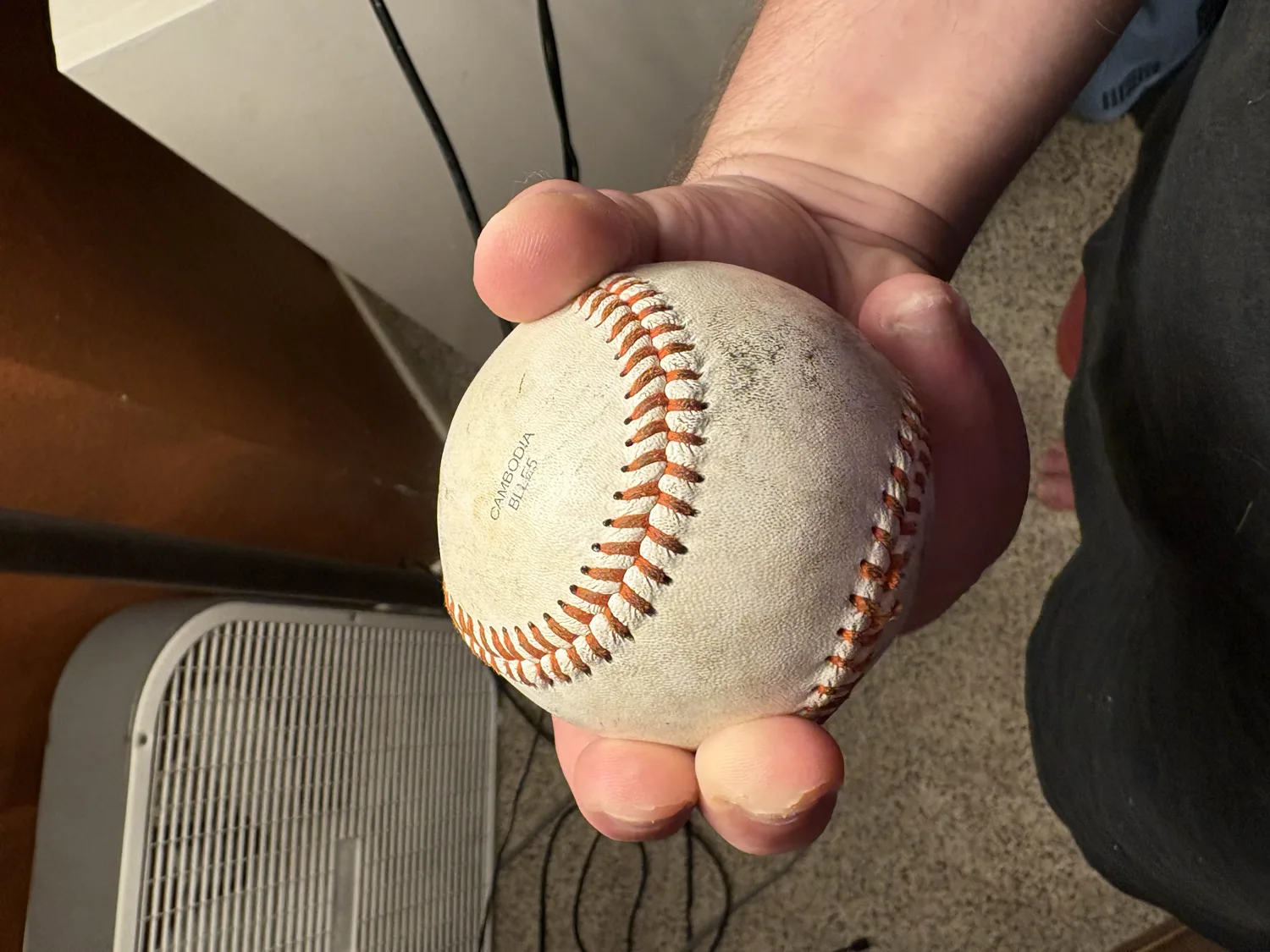
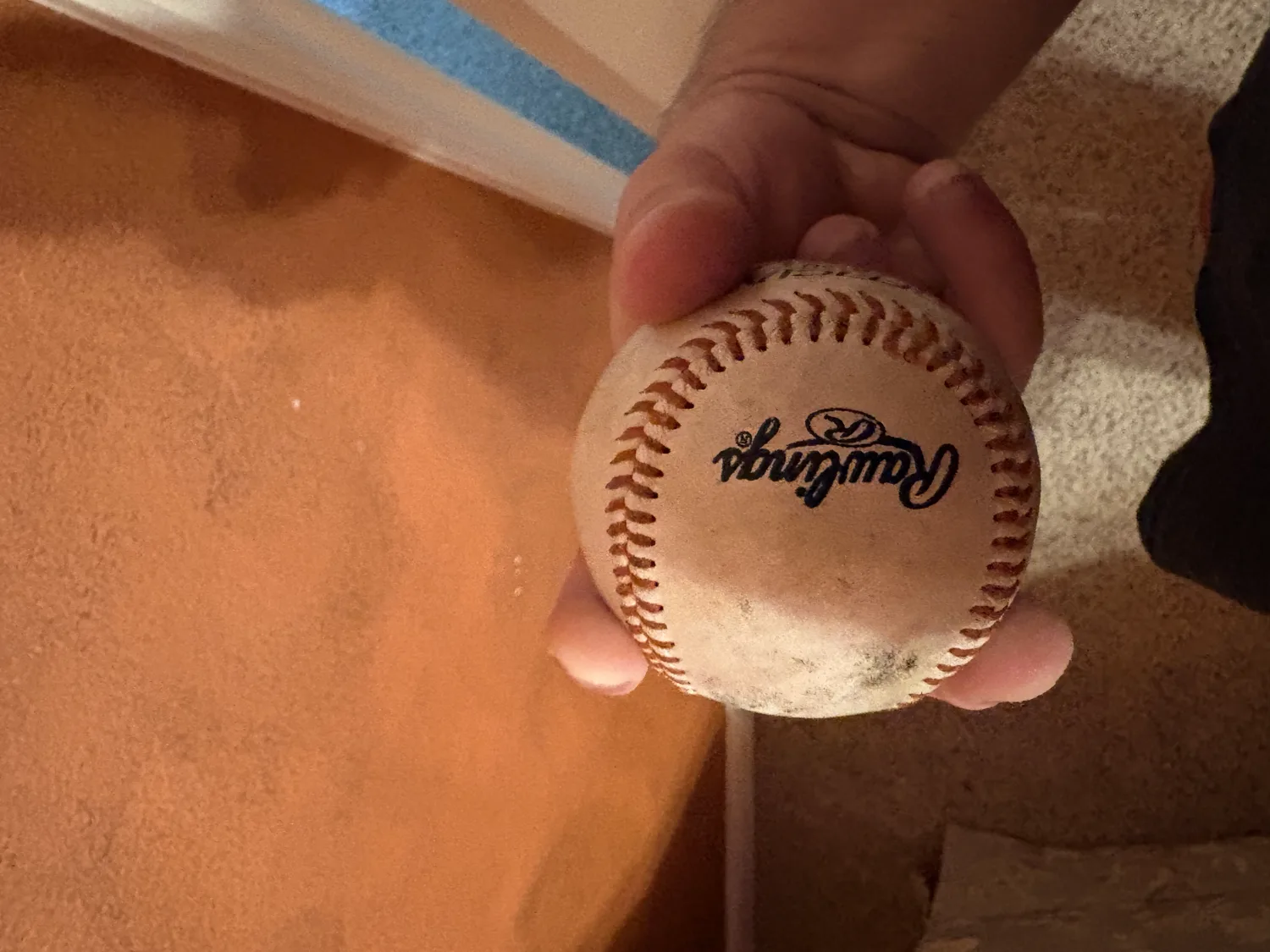
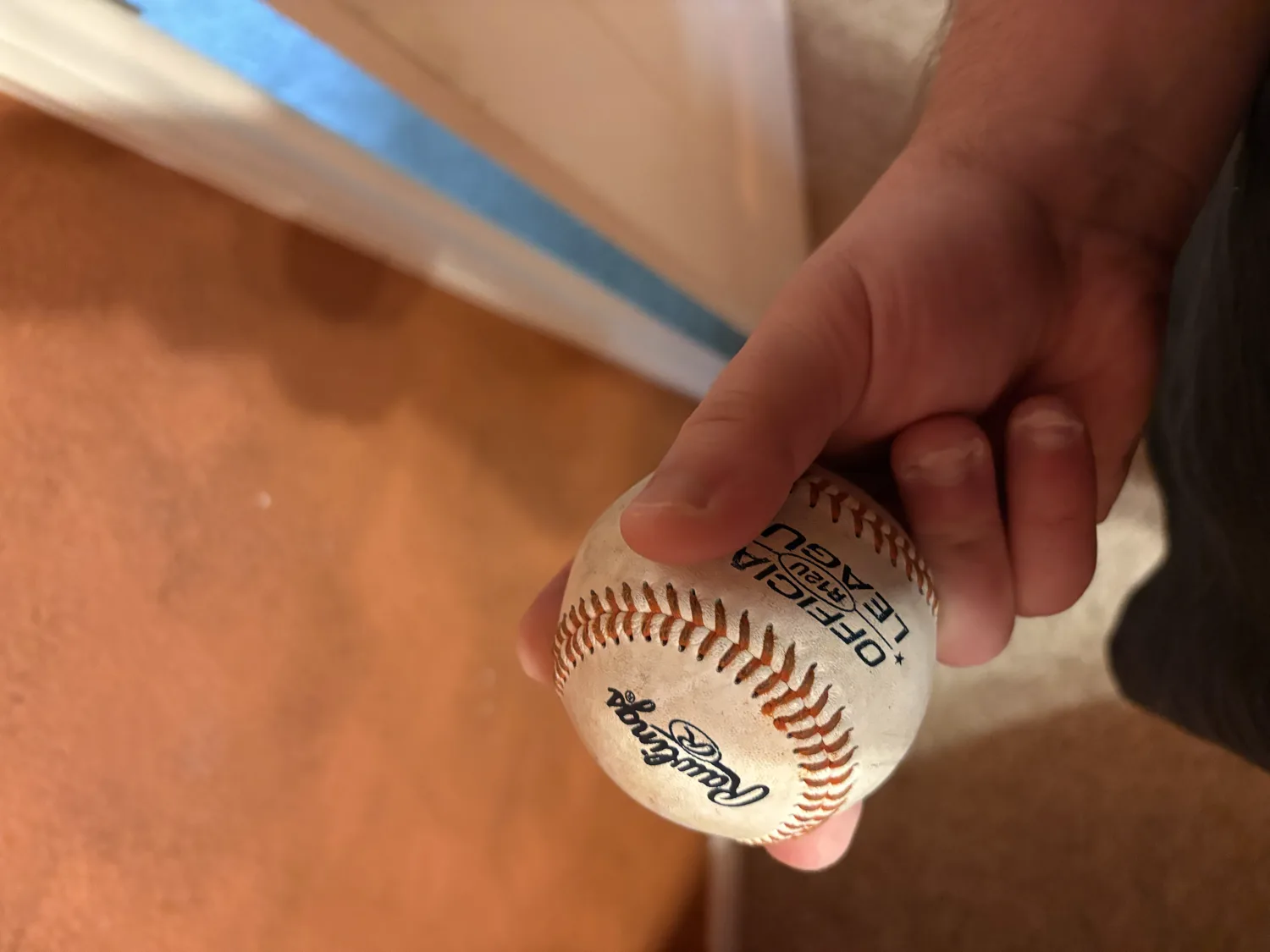
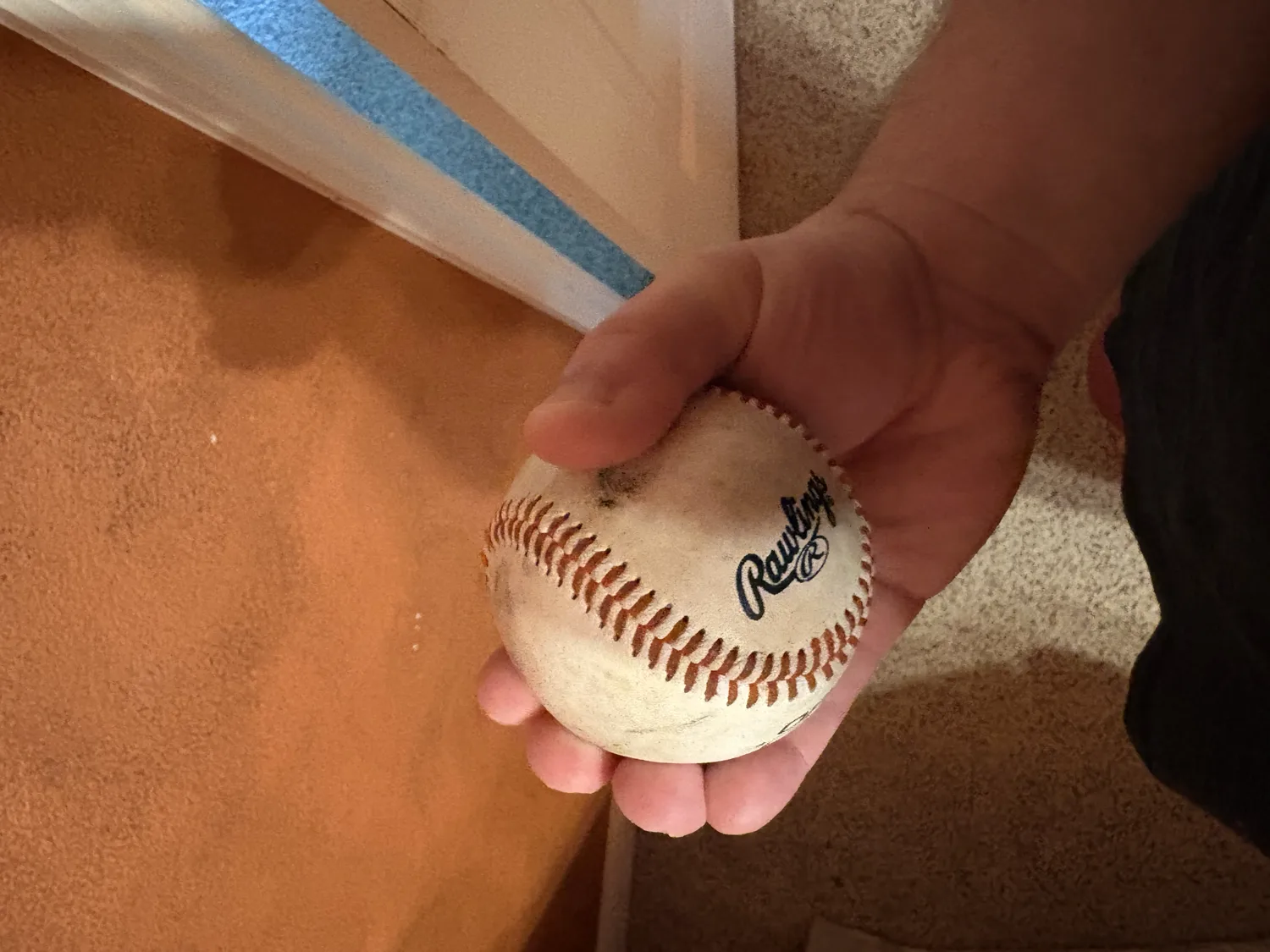
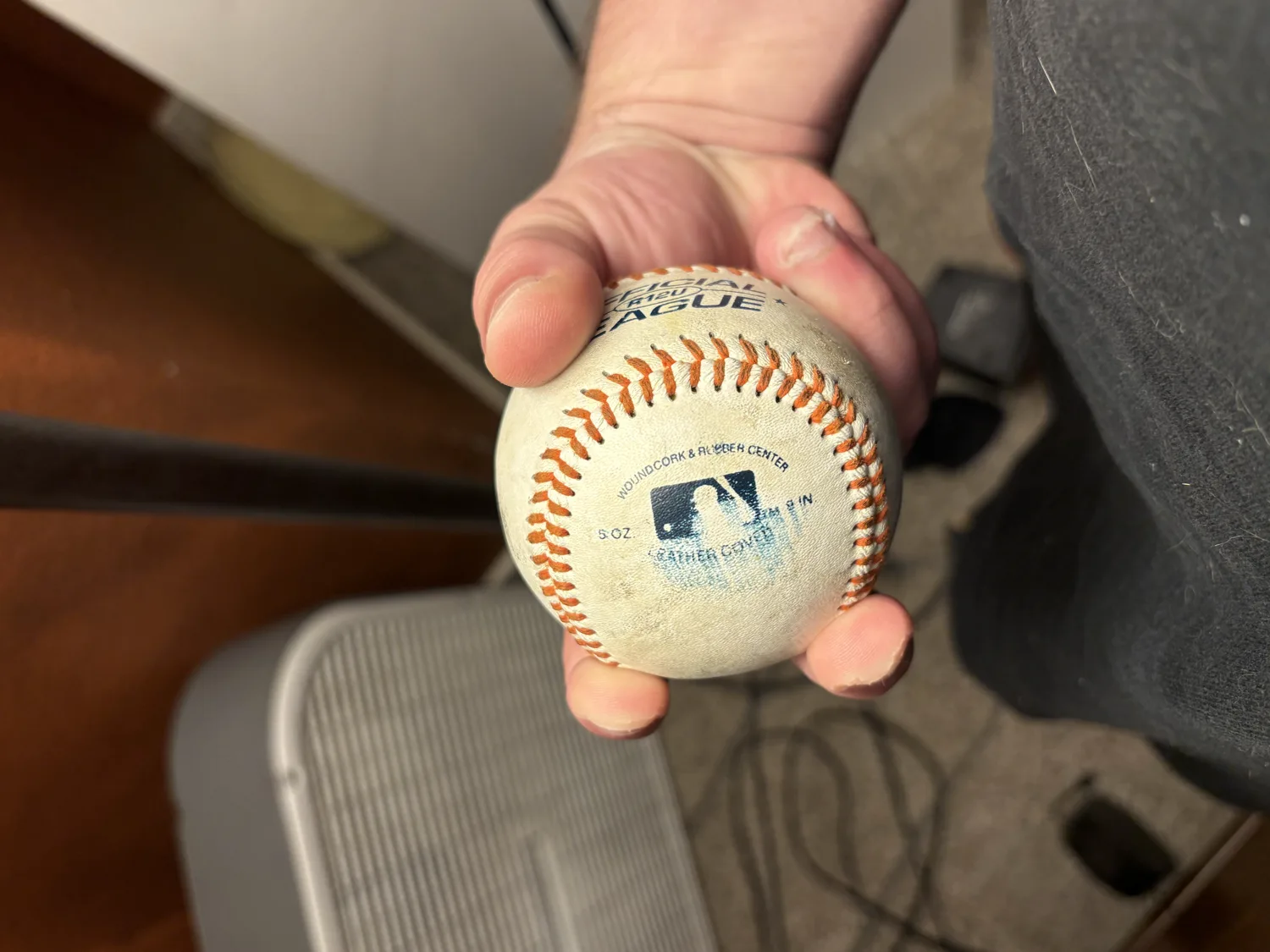
Two fingers on the ball, and the four-seam should be a dead giveaway. The fingertips cross the seam slightly — the very ends of the pads catching across it, not riding parallel to it. There is barely any pressure on it at all, and that is why it leaves clean and true. It is the bread and butter of everything: the easiest pitch to place in the zone and the most consistent pitch in the game.

Austin H. · in his own words

How it moved

My best pitch, and the one I had pinpoint command of — it went straight and I could put it anywhere in the zone. The life came late: it tended to explode into the glove at the very last second. That last-second hop is the carry the four-seam is known for — the eye reads it as rising when it is really just falling less than expected.

Motion

A looping close-up of Austin's four-seam grip: two fingertips laid across the seam, the ball held out toward the camera.

Original · Austin H.
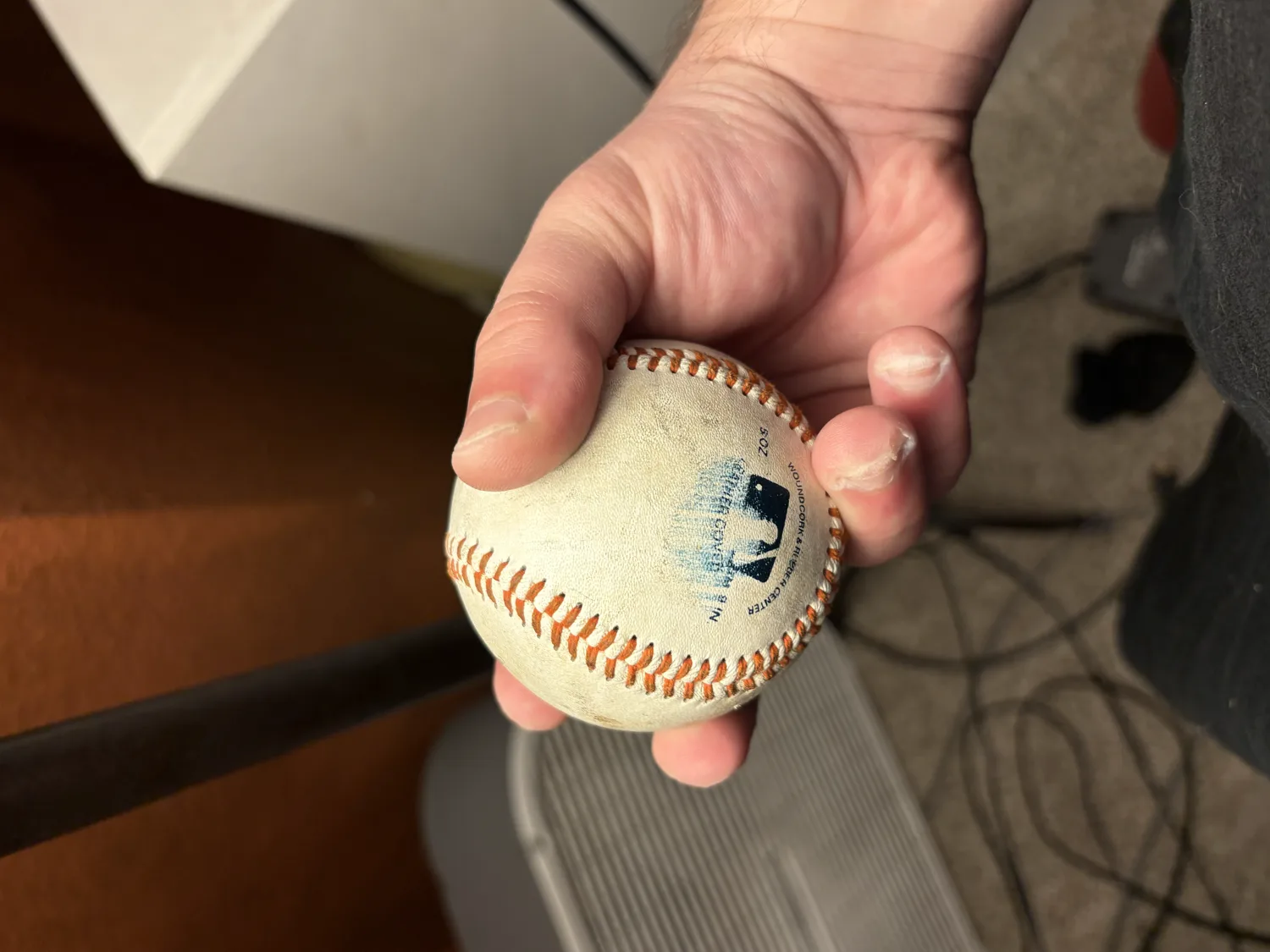
A right hand gripping a baseball four-seam style, two fingertips crossing the horseshoe seam with the thumb underneath.Top

Top of the grip: index and middle fingertips laid across the seam at the wide horseshoe, thumb tucked underneath.

Original · Austin H. · 2026
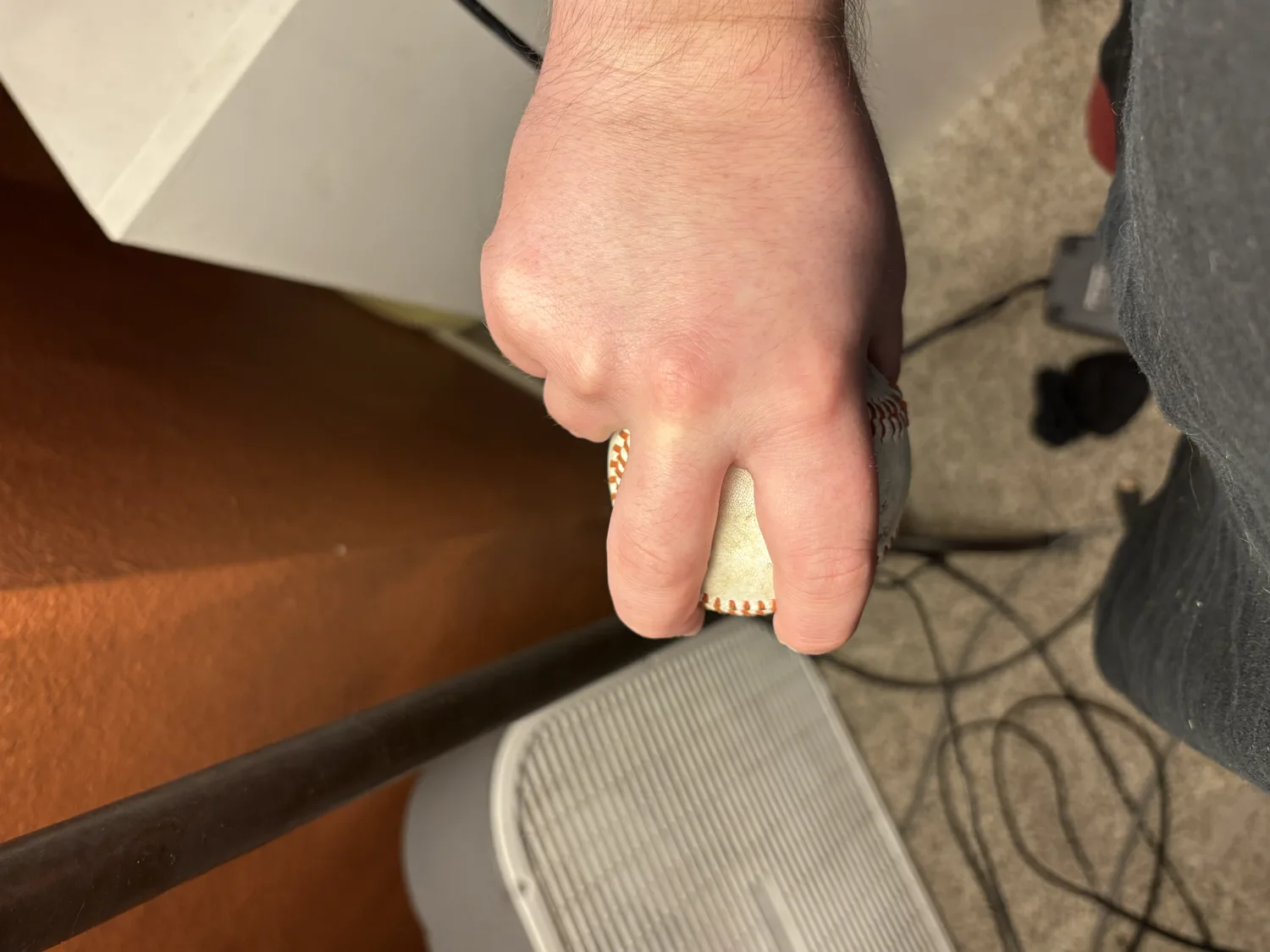
The underside of a four-seam grip, the thumb supporting the ball centered below the two top fingers.Underside

From underneath: the thumb on smooth leather, centered below the two top fingers.

Original · Austin H. · 2026
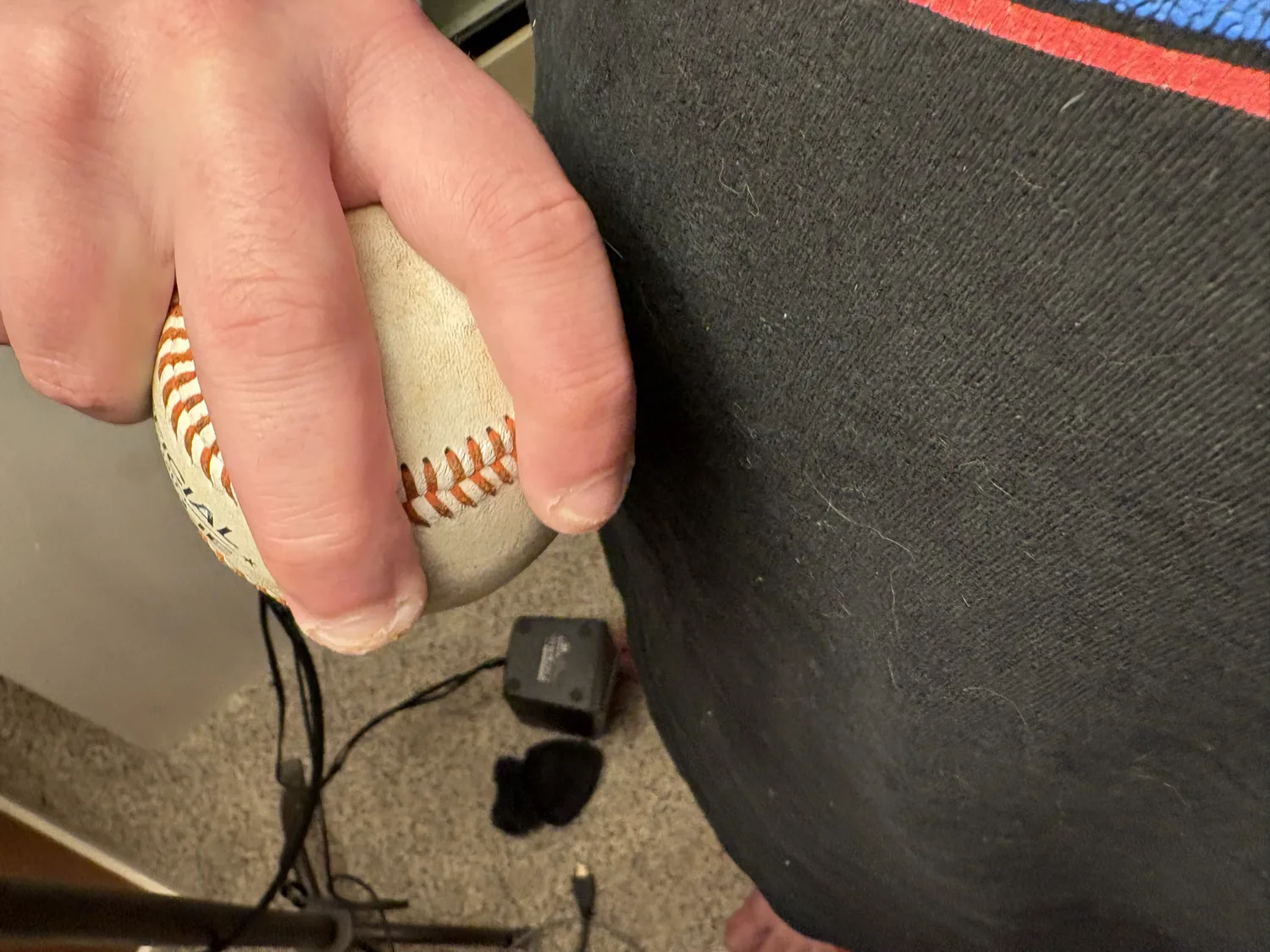
A side view of a four-seam fastball grip, fingertips crossing the seam.Side

The same hold from the side, the fingertips just catching across the seam.

Original · Austin H. · 2026
Two-seam fastball

See the specimen
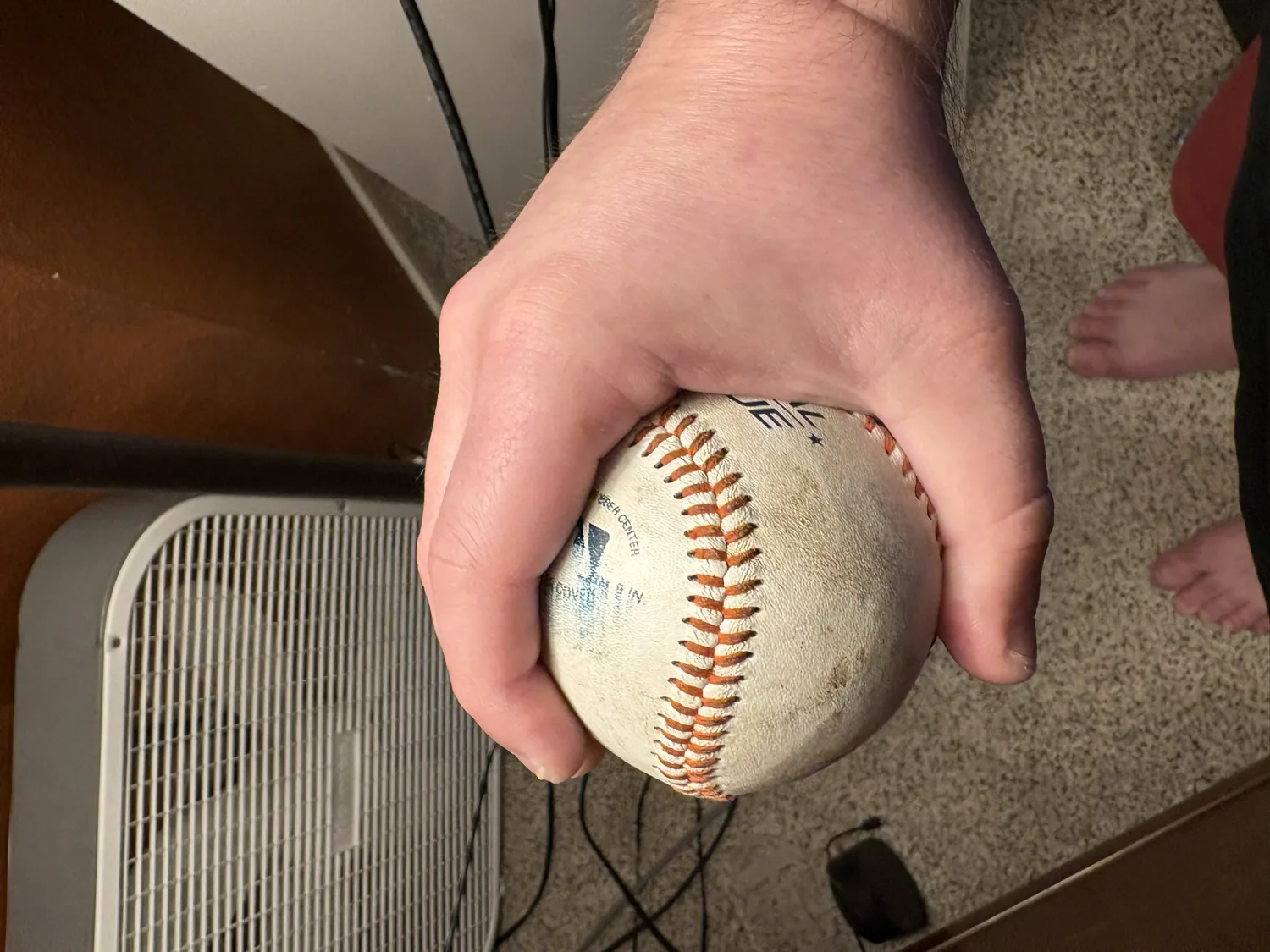
Two fingers on the ball again, but here they line up with the seams like the ball is running down a train track — both fingers riding along the narrow seams instead of crossing them. That is the tell that separates it from the four-seam.

Austin H. · in his own words

How it moved

The second pitch I mastered. I lived with it in on the hands to right-handed hitters, because it had explosive late tail — it ran arm-side at the very last second, right in on a righty.

Motion

A looping close-up of Austin's two-seam grip: two fingers running along the narrow seams like train tracks.

Original · Austin H.
A hand gripping a baseball two-seam style, index and middle fingers running along the two narrow parallel seams.Top

Two fingers running along the narrow seams, the train-track look that names the pitch.

Original · Austin H. · 2026
A two-seam fastball grip viewed from the front, fingers resting on the parallel seams.Side

The seams as rails: the fingers sit on the two seams where they run closest together.

Original · Austin H. · 2026
The underside of a two-seam grip, the thumb supporting from below.Underside

From beneath, the thumb braced under the ball.

Original · Austin H. · 2026

12-6 curveball

See the specimen
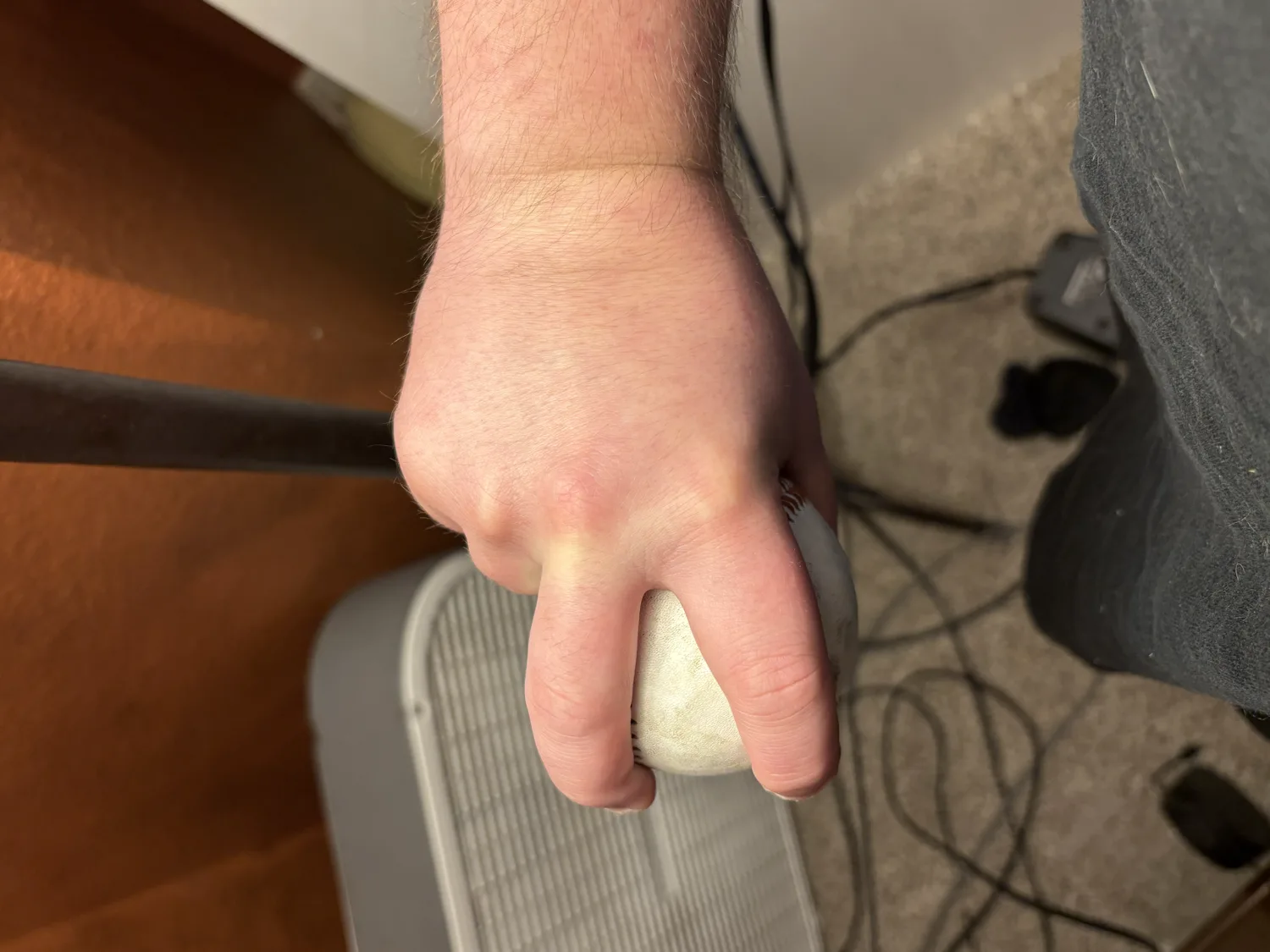
Two fingers lined up and cornered against the seam, with no other pressure on the ball but the thumb. The grip is so distinct you do not even need to see the release slot to know it is a 12-6 — the fingers tucked tight to one seam give it away.

Austin H. · in his own words

How it moved

A genuine 12-6 when it was working: it came in with real loop and then fell off the table at the last second. The down-mover in my mix — more loop than the changeup, and a sharper drop.

Motion

A looping close-up of Austin's 12-6 curveball grip: two fingers tucked together and cornered against one seam.

Original · Austin H.
A hand gripping a baseball for a 12-6 curveball, two fingers together cornered against one seam.Top

Top-down: the two fingers tucked together and cornered against a single seam, the rest of the ball left open.

Original · Austin H. · 2026
A side view of a 12-6 curveball grip, two fingers against the seam with the thumb under the ball.Side

From the side: the fingers pinched to the seam, thumb braced underneath.

Original · Austin H. · 2026
A 12-6 curveball grip held in the hand, the fingers bent over the seam.Side

Set in the hand, the knuckles bent over the seam before the spin goes on.

Original · Austin H. · 2026

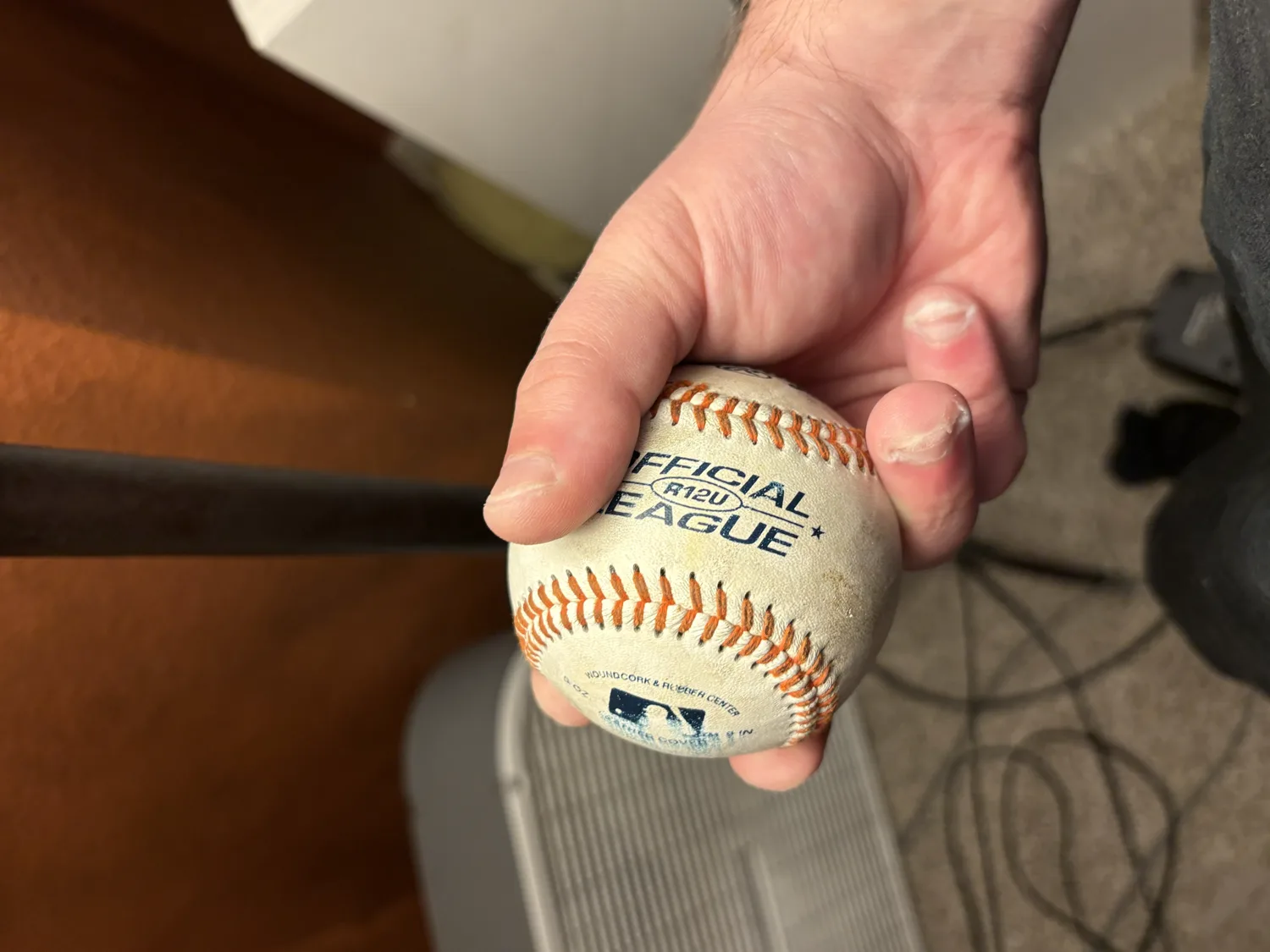
Split-finger fastball

See the specimen
Gripped almost exactly like the two-seam, except the fingers spread out wider — just outside the laces instead of right on them. With short, stubby fingers like mine you can barely see the difference. Those same short fingers are the reason I have never been able to throw a circle change.

Austin H. · in his own words

How it moved

I threw this some as a harder version of the changeup — it let me stay at full arm speed and feel more like a fastball than a traditional change at release, then drop. The fastball-tilt change, not a soft one.

A hand gripping a baseball splitter style, index and middle fingers spread wide just outside the seams.Top

Index and middle split wide, sitting just outside the seams rather than on them.

Original · Austin H. · 2026
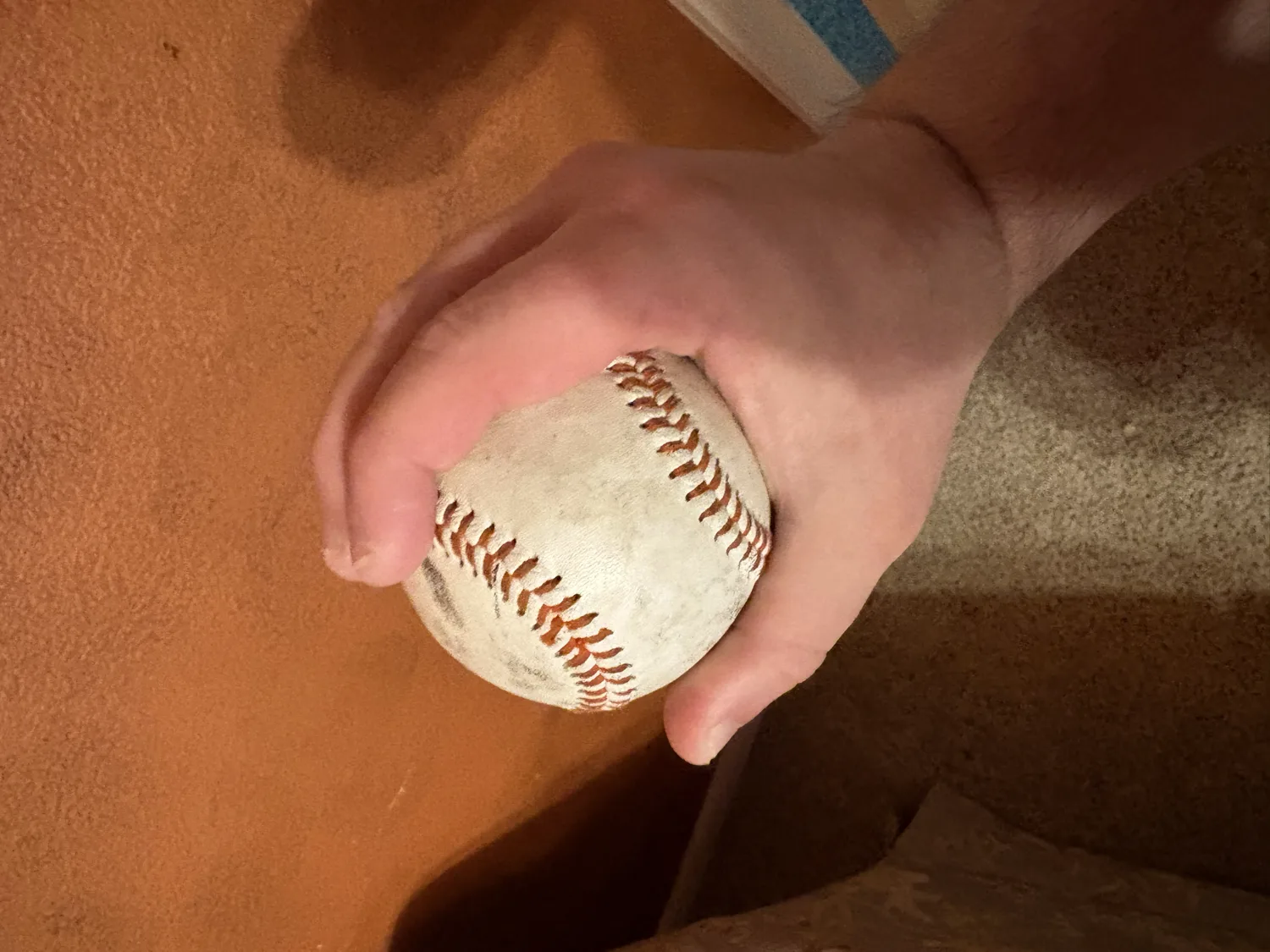
A top view of a split-finger grip, two fingers spread apart over the ball.Top

Top-down: the gap between the two fingers is the whole pitch.

Original · Austin H. · 2026
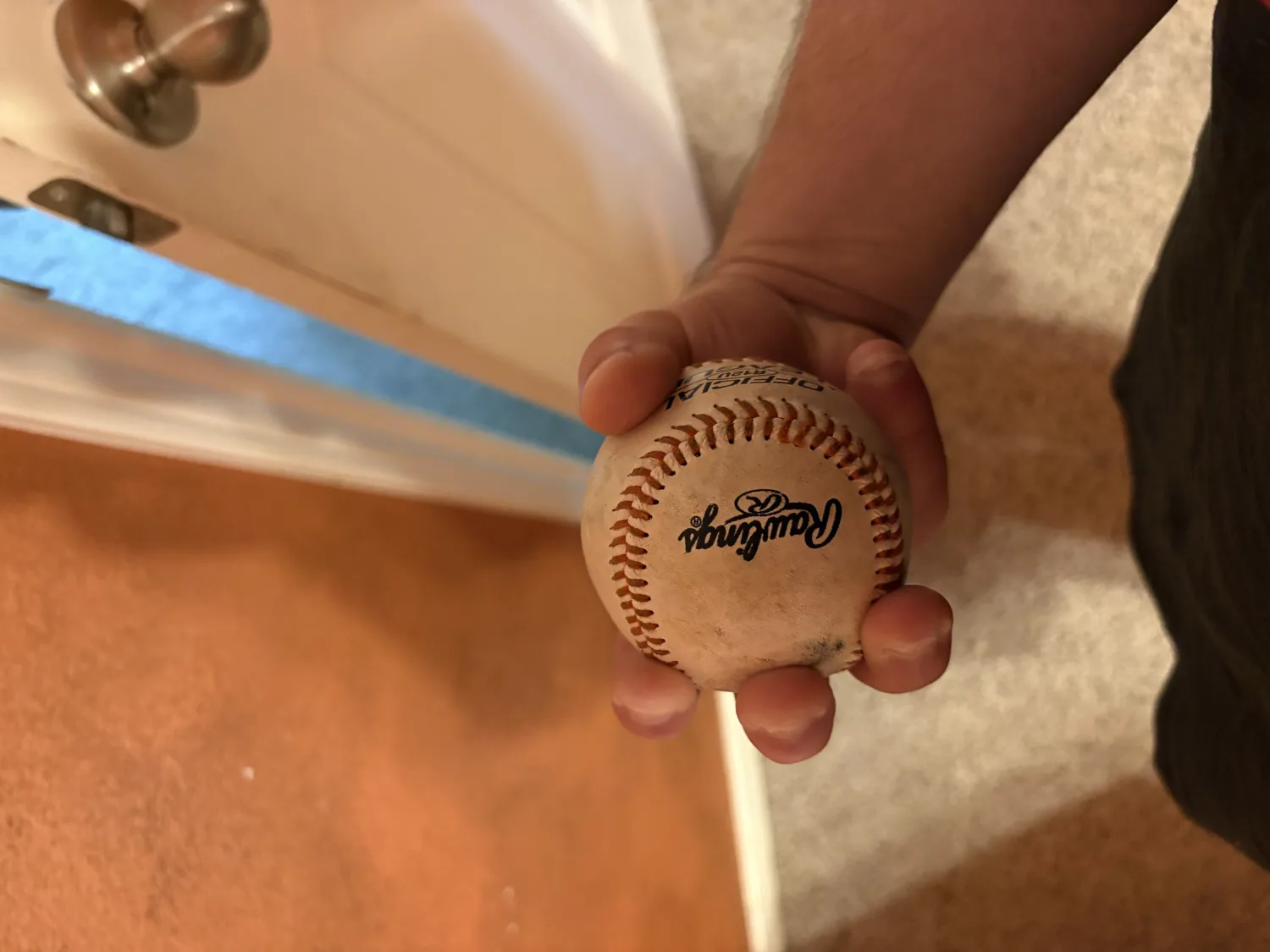
A side view of a splitter grip, the fingers straddling the seams.Side

From the side, the fingers straddle the seams with the ball set back in the hand.

Original · Austin H. · 2026
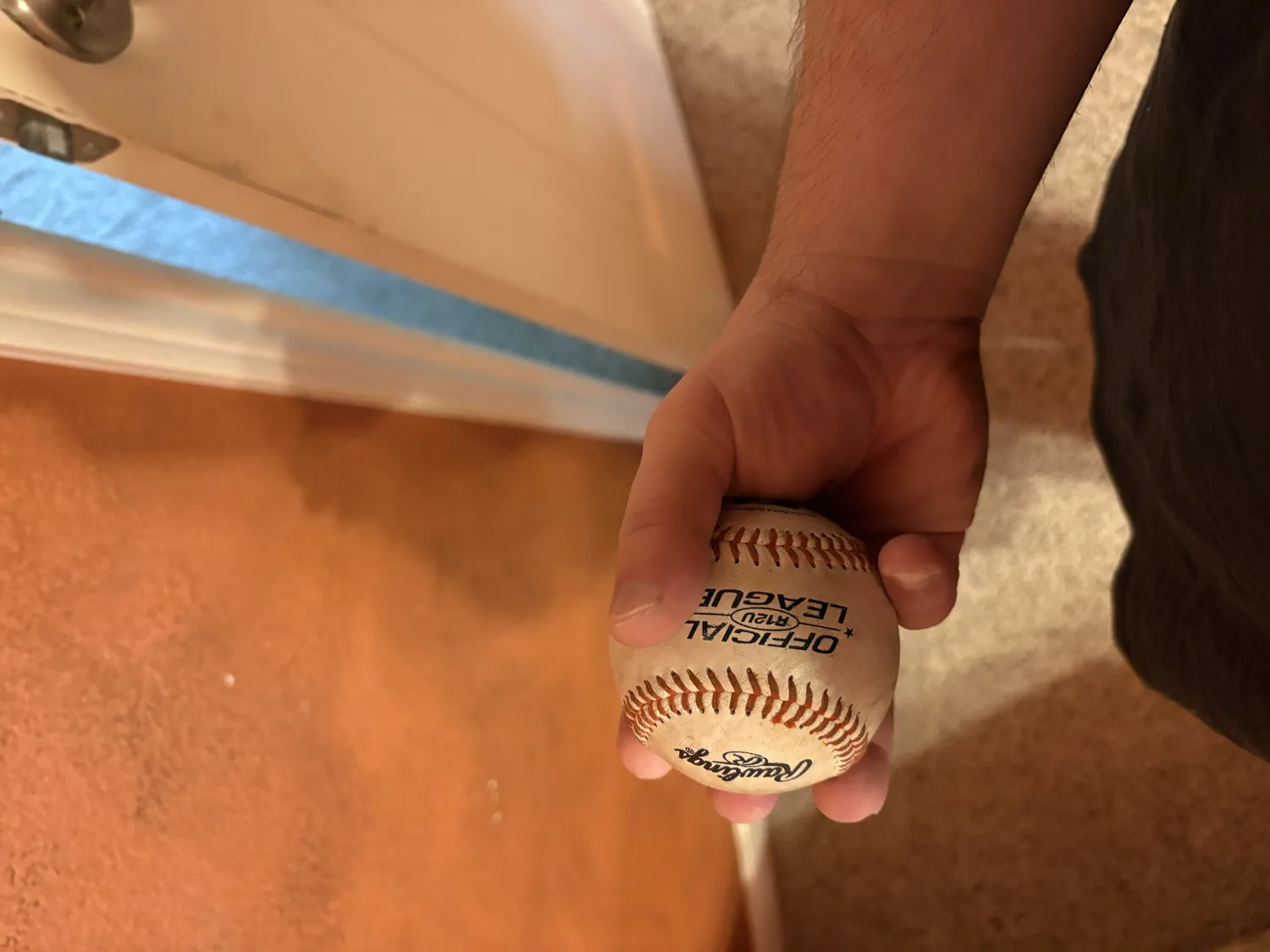
Football change (palmball)

Open the file
My football change. The giveaway is the hand together, all four fingers touching the ball. The more fingers you put on it, the more it slows down coming out — instead of getting slingshotted off the fingertips and snapped with the wrist, the whole hand drags the speed off it while the arm still looks like a fastball.

Austin H. · in his own words

How it moved

I only threw this much for about one summer, here and there. It sat between my curve and my three-finger change: the same release slot as the 12-6 — palm pointed back toward me instead of out at the batter — but a break in between the two.

A hand gripping a baseball with all four fingers together across the top, the football change or palmball grip.Top

Four fingers laid together across the top of the ball, seated deep toward the palm. The football-change smother.

Original · Austin H. · 2026
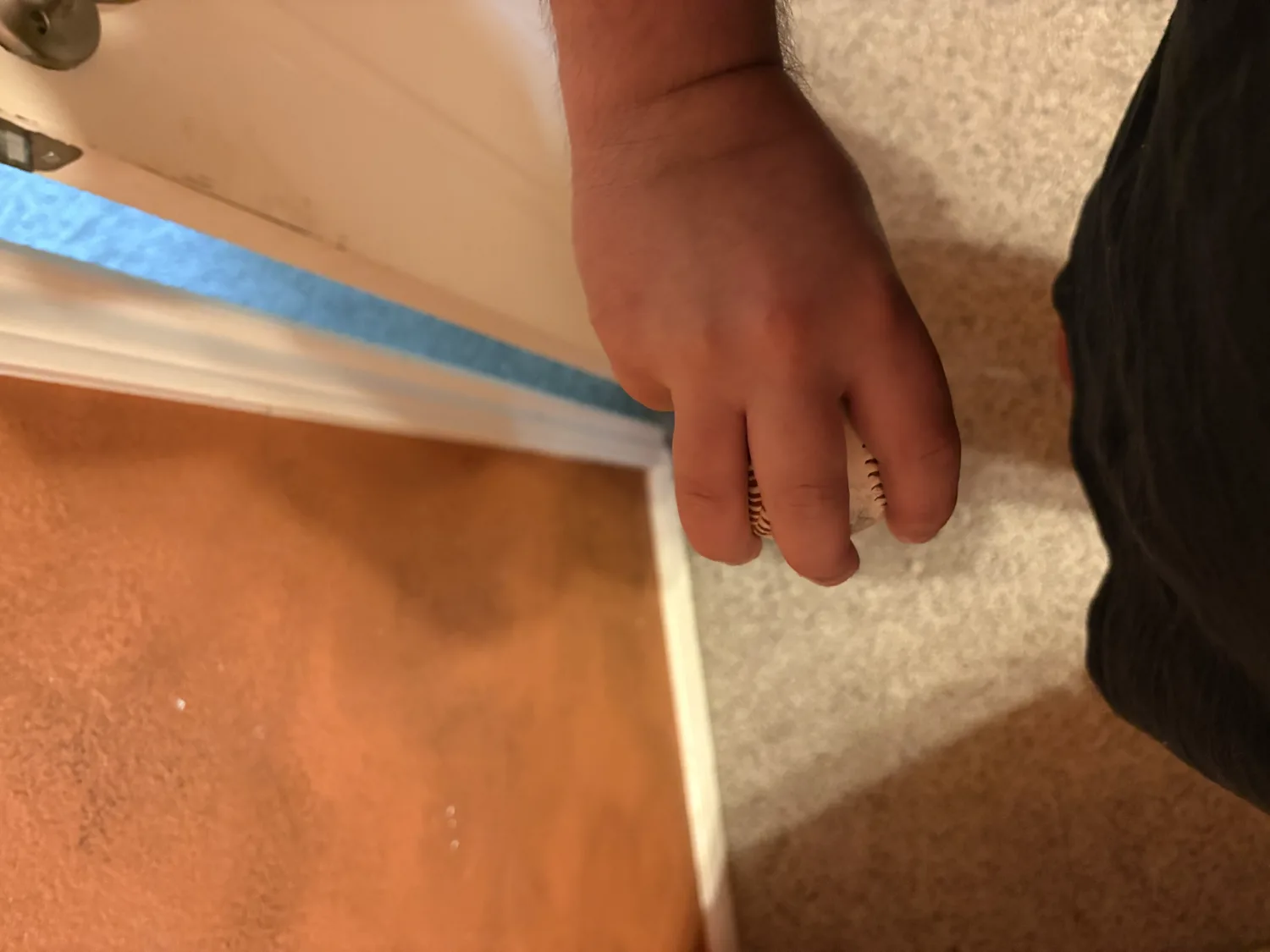
A side view of a football-change grip with the ball set deep in the palm under four fingers.Side

From the side, the ball buried deep in the hand under all four fingers.

Original · Austin H. · 2026

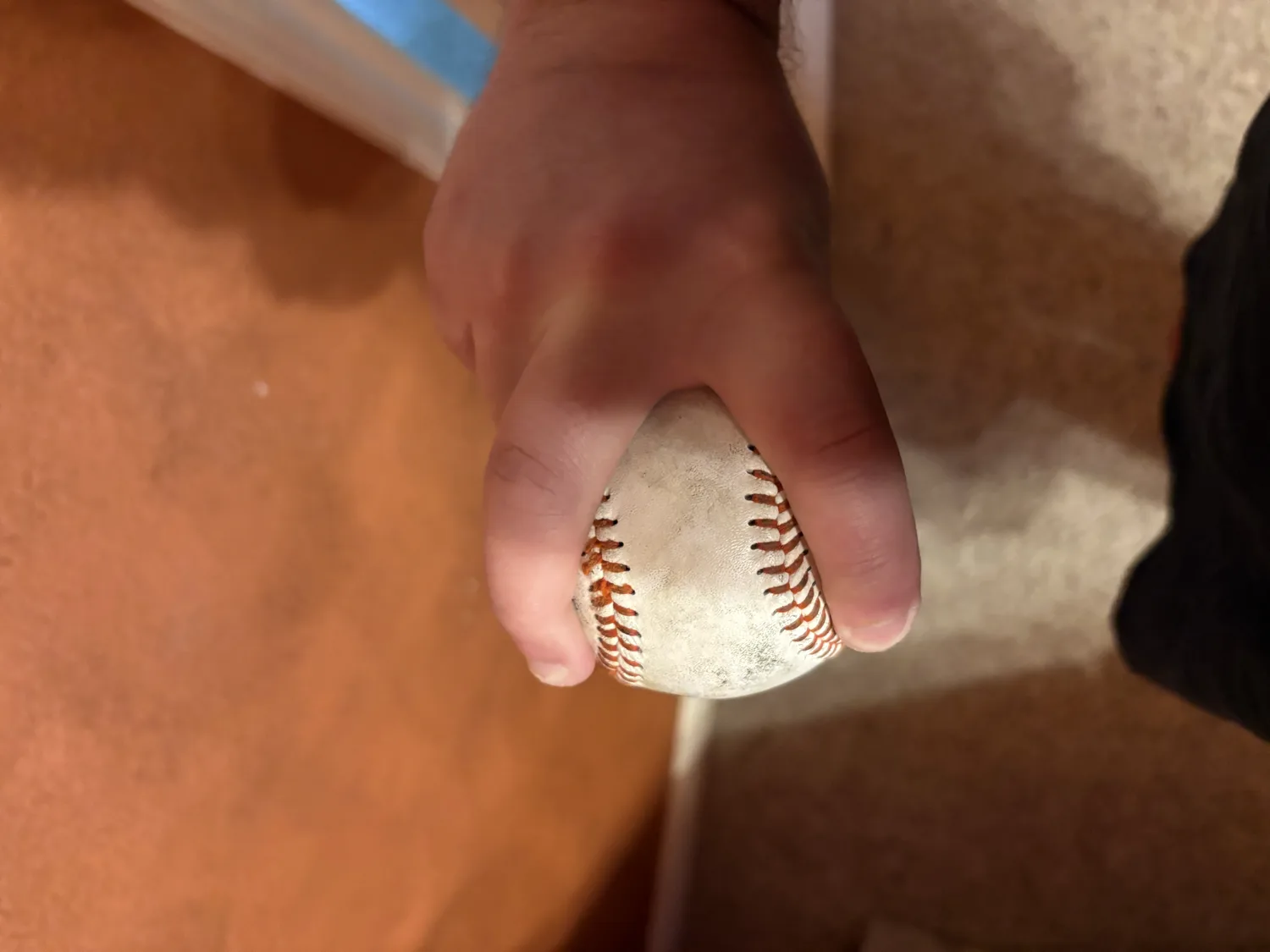
Three-finger changeup

Open the file
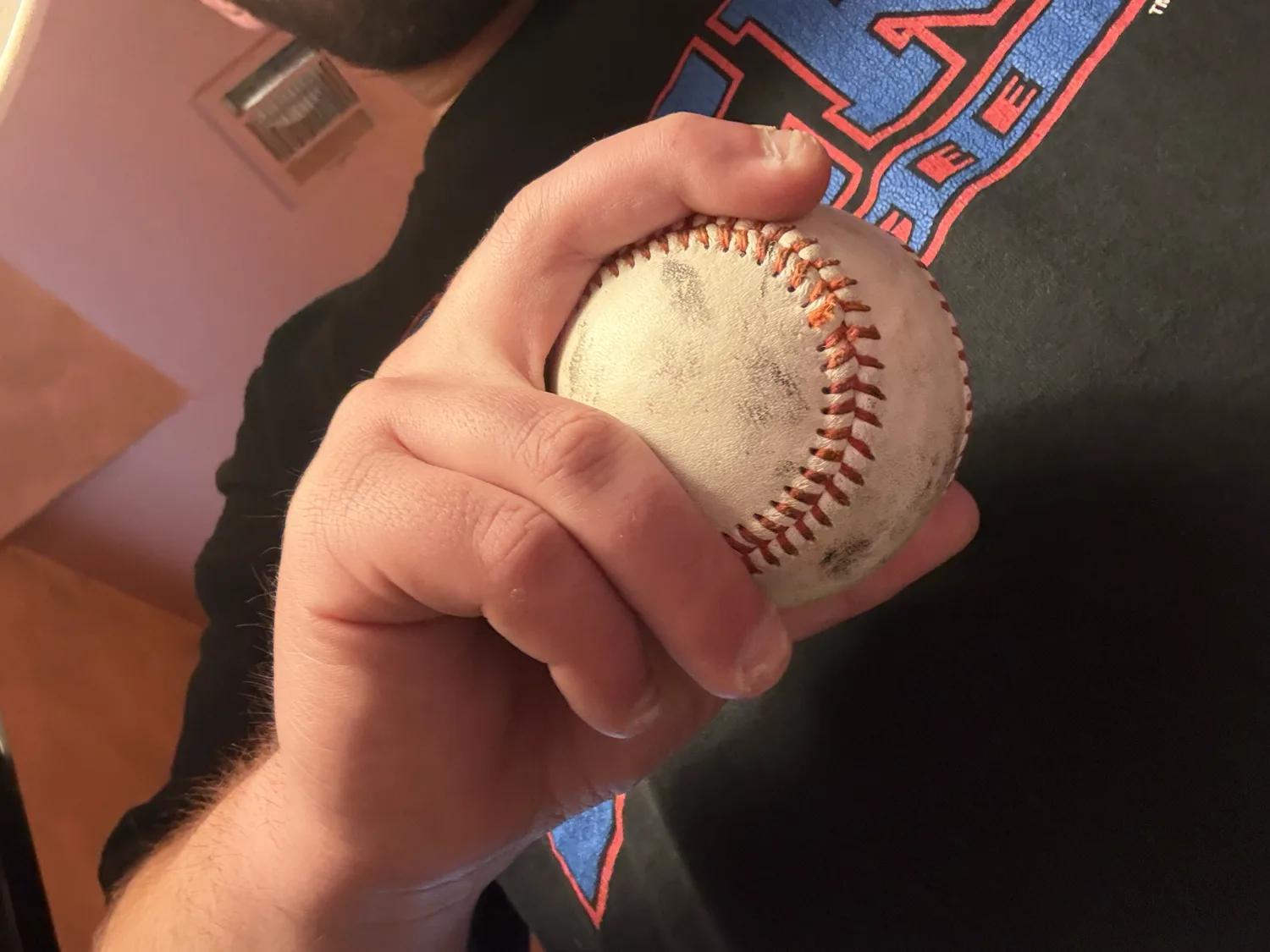
Three fingers set very close together across the ball. Same idea as the football change, just a touch less hand on it — more fingers than a fastball means more surface and more drag, so it leaves softer than the arm speed says it should.

Austin H. · in his own words

How it moved

My fourth pitch, and one I threw a lot in games. It came in looking like a fastball and dropped with less break than the curve — not as sharp or as consistent, but it sold the fastball look right up until it died.

Motion

A looping close-up of Austin's three-finger changeup grip: three fingers set close together across the top of the ball.

Original · Austin H.
A hand gripping a baseball with three fingers close together across the top, a three-finger changeup grip.Top

Three fingers seated close together across the top of the ball.

Original · Austin H. · 2026
A side view of a three-finger changeup grip.Side

From the side, the three fingers across the top with the ball set back in the hand.

Original · Austin H. · 2026
The underside of a three-finger changeup grip.Underside

From underneath, the three fingertips coming over the top edge.

Original · Austin H. · 2026
Austin says he could not throw a circle change comfortably because his hands were too small to form the grip.

Austin H. · in his own words

Circle Changeup · Filed from external sources · No Austin grip photo

Austin's personal grip library excludes the circle change because his hand size could not form it cleanly.

How he attacked hitters

The grips, put to work

I always established the four-seam high and inside — the first pitch of the game, and pretty much everything after it, until a hitter could catch up to something hard and on the hands. From there I liked to dot the four-seam low and away on the corner, and high and in on the corner, often as the strikeout pitch later in the count.

The lefty putaway

My go-to against a left-handed hitter: set him up early, move his eyes and his clock around, then freeze him with the fastball in a spot I had cleared. Most effective when I was already up in the count.

  1. 01High and insideHeat up and on the hands to start — establish the fastball where he has to respect it.
  2. 02High and outsideSame eye level, the other side of the plate — widen the look without lowering his eyes.
  3. 03Below the zoneSomething slowed down in the dirt or barely under the zone — change his clock and pull his eyes down.
  4. 04High and tightBack up and in with heat — eyes back up, hands honest again.
  5. 05Dotted low and inPutawayThe putaway: a four-seam dotted low and in to freeze him — a spot and level I had not buried there yet. Deadliest when I am already ahead.

On command and the arm slot

I never noticed a big difference in shape or control from switching pitches — or from switching it up — because I never really had issues with pace, command, or movement. Those were fundamentals, drilled into me. And I would seamlessly, sometimes intentionally, drop down to three-quarters. It felt the same to me, but it gives a different look to a hitter who is already guessing anyway.

Austin H. · a pitcher’s own account, not tracked data

Same release, different grip

Two grips, one arm slot

A hitter reads the delivery, not the hand. Put two grips side by side under one shared arm slot and the trick becomes obvious: the part they can see is identical, and the part that decides the pitch is the part they can’t. These balls are our own seam geometry, oriented to the grip — schematic, not a hand — and with no WebGL they fall back to the 2D seam diagram, so the grip still reads.

Arm slot (both grips)
Handedness
A Four-seam fastball specimen. The seam is the closed figure-eight curve laid on the ball, oriented to the pitch's spin axis.

fastballLet the index and middle pads roll the ball off the top with backspin.

Four-seam specimen →
A Circle changeup specimen. The seam is the closed figure-eight curve laid on the ball, oriented to the pitch's spin axis.THUMB CIRCLE

offspeedKeep fastball arm speed and let the deeper grip take speed off.

Circle change specimen →

Same arm slot, same release — switch the view and both balls turn together, because the delivery is the part the hitter can read. The grip is the part they can’t. Once these two leave the hand looking identical, the only question left is what each one does on the way to the plate — see the movement tunnel.